
 English
In today's digital world, internet access has become an essential part of our lives, supporting our work, entertainment, and daily communication. But among the various connection methods, do you truly understand their differences? From traditional Digital Subscriber Line (DSL), to widely adopted Cable Internet, and future-speed Fiber Cable, each technology has its unique principles, advantages, and limitations. This article will delve into these three technologies, helping you clearly understand their working mechanisms, performance differences, and current market positions, so you can make the best choice for your home or business.
1.What is DSL
DSL (Digital Subscriber Line) is a technology that transmits both voice and internet data over telephone lines. Although DSL connections are generally slower than cable internet, they are more affordable and do not require bandwidth sharing with neighbors like cable networks. Each DSL user has a dedicated line rather than a shared one. As an early broadband access solution, DSL was widely used in home networks, but its market share is now gradually declining, being replaced by more advanced technologies like Ethernet or fiber.
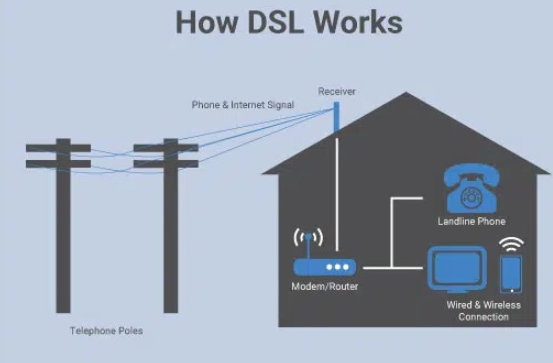
DSL has multiple variants, including HDSL, SDSL, VDSL, ADSL, and RADSL, collectively referred to as xDSL. DSL cables typically use telephone lines, commonly with 2-core, 4-core, 6-core, and 8-core types, with 4-core being the most prevalent. Two-core cables are mainly used for analog signal transmission, while four-core supports digital phone signals.
2.What is Cable Internet
Cable internet is a high-speed access technology that utilizes cable modems and coaxial cables to connect to an Internet Service Provider (ISP). Typically offered by cable television providers, this service features wide coverage and multiple speed options. ISPs provide customers with a modem—more accurately, a gateway device that integrates both modem and Wi-Fi router functionality. Installation simply requires connecting the coaxial cable in your home to the back of the modem.
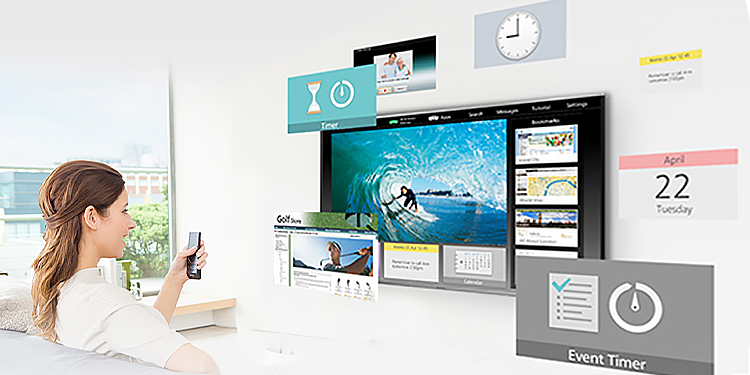
While cable internet offers advantages like high availability and speed options, a key drawback is that the bandwidth sharing among neighbors. During peak usage hours, simultaneous connections within the same area may result in slower speeds.
3.What is Fiber Cable
Fiber optic networks deliver the world's fastest internet speeds by transmitting data as light pulses through glass fibers, leveraging the principle of total internal reflection. There are two main types:
- Multimode Fiber: Uses 850 nm or 1310 nm wavelengths for short-distance transmission.
- Single-mode Fiber: Operates at 1550 nm for long-distance connectivity.
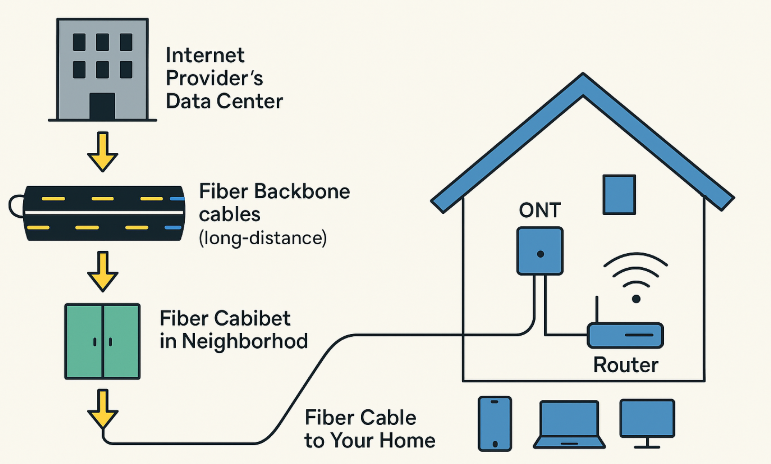
Compared to traditional copper cables, fiber offers:
- Greater Bandwidth: Advanced technologies maximize capacity.
- Lower Attenuation: Quartz fibers experience minimal signal loss over long distances.
- Enhanced Security: The outer cladding absorbs light leakage, preventing interference, crosstalk, and data interception.
4.DSL vs Cable vs Fiber: Technical Comparison
| Feature | DSL | Cable | Fiber Cable |
|---|---|---|---|
| Material | Copper telephone lines | Copper coaxial cable | Glass/polymer fibers |
| Signal Type | Electrical | Electrical | Optical (light) |
| Max Speed | ~52 Mbps (VDSL2) | ~10 Gbps (DOCSIS 4.0) | Virtually unlimited (100G+ commercially available) |
| Range | ~5.5 km | ~100 m (node-dependent) | MMF: ~2 km SMF: ~200 km |
| Interference | Highly susceptible to EMI | Shielded, but still affected | Immune to EMI |
| Security | Vulnerable to tapping | Vulnerable to tapping | Nearly impossible to intercept |
5.Current State of DSL, Cable, and Fiber Industries
While specific data may vary over time, cable internet remains the primary broadband access method for American households, while fiber is growing rapidly and DSL continues to lose market share. Fiber is accelerating its deployment and penetration in the premium market, while fixed wireless access (FWA) stands out in meeting low-cost and mid-speed demands. Cable internet is on the defensive, maintaining its position through technological upgrades, whereas DSL is gradually being phased out.
Regardless of how technology evolves, the future winners will be those companies focused on helping customers connect efficiently, rather than providers clinging to traditional positions and creating obstacles.
6.Which Network is Right for You?
For users with extremely limited budgets, DSL may be the best choice as it is typically the most economical option, with some local support programs potentially covering its costs. Most households require internet for daily activities, and cable internet, as a widely available and affordable option, has served users for decades. As fiber networks expand to more areas at lower prices, they are quickly becoming the top choice for users seeking high-speed experiences.


