
 English
400G Ethernet is the central technology addressing high-bandwidth demands in data centers. The key 400G network interconnection options including: 400G optical transceiver modules, 400G DAC (Direct Attach Copper Cables), 400G ACC (Active Copper Cables), 400G AEC ( Active Electrical Cables ) and 400G AOC (Active Optical Cables). Each has distinct features in distance, cost, power consumption, and performance, which are crucial for network deployment.
400G Optical Module vs. DAC vs. ACC vs. AEC vs. AOC: Technical Characteristics
The key to selecting the correct 400G interconnection solution (Optical Module vs. DAC vs. ACC vs. AEC vs. AOC) lies in understanding the essential differences in their transmission media, active/passive nature, and signal capabilities. These differences, despite the shared 400Gbps speed, dictate the optimal application scenario for each.
400G DAC (Direct Attach Copper) is a passive copper cable solution that transmits electrical signals via copper wire for direct interconnection using standard connectors (like QSFP-DD or OSFP) at both ends. Its transmission distance is very short, typically under 3 meters, limiting its use to within-rack short-distance connections. The primary advantages are its lowest cost and extremely low power consumption due to its passive design, offering simple plug-and-play efficiency. However, its drawbacks include the distance limitation and high susceptibility to electromagnetic interference (EMI).
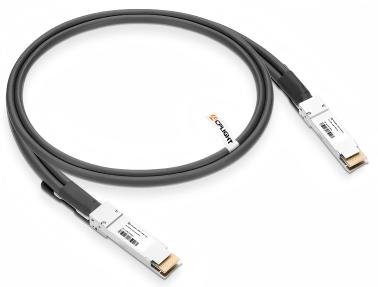
Figure 1: AICPLIGHT 400G DAC (1-3m)
400G ACC (Active Copper Cable) is an upgraded solution over 400G DAC, integrating active signal drivers to boost signal integrity and extend reach. This allows it to typically support up to 5-6 meters of transmission, meeting some cross-rack short-distance needs, an improvement of 2-3 meters over 400G DAC.
400G ACC achieves a balance, offering lower cost and power consumption than 400G AOC while providing longer distance and less signal loss than 400G DAC. However, as a copper solution, its drawbacks remain: the cable is heavy and bulky, complicating high-density cabling and rack management, and the maximum distance is still limited by copper physics, making it unsuitable for medium-to-long distances.
400G AEC (Active Electrical Cable) is an advanced version of 400G ACC, significantly boosting signal quality and distance by integrating CDR (Clock Data Recovery) and Retimer chips at both ends. This architecture not only amplifies the signal but also reshapes it, allowing for a maximum transmission distance of up to 7 meters. With the inclusion of FEC (Forward Error Correction), 400G AEC achieves an extremely low bit error rate, making it suitable for supporting Distributed Data Center (DDC) architectures.
Advantages: 400G AEC offers a compelling blend of performance and cost. It is cheaper than 400G optical modules and AOCs, provides far superior performance to 400G DAC and ACC, and drastically improves cabling efficiency (up to 70% space saving vs. 400G DAC). Its strong signal integrity effectively handles crosstalk and jitter.
Disadvantages: Its main drawbacks are higher power consumption compared to 400G DAC and ACC, and its transmission distance is still limited by copper physics, preventing it from competing with fiber optic solutions.
400G AOC (Active Optical Cable) is an active interconnection solution that utilizes optical fiber as the transmission medium, significantly extending reach compared to copper cables. It supports distances up to 70 meters using OM3 fiber and 100 meters with OM4 fiber, effectively covering short-to-medium-distance links within a data center.
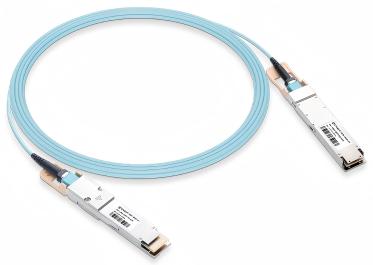
Figure 2: AICPLIGHT 400G AOC
Advantages: 400G AOC benefits from fiber optics, offering a lightweight and small size with a tight bending radius, which simplifies high-density cabling. Crucially, it provides natural electrical isolation, granting immunity to EMI and ensuring extremely high transmission stability. It also supports various breakout configurations for topology flexibility.
Disadvantages: The main drawbacks of 400G AOC are higher cost and higher power consumption than copper solutions (400G DAC/ACC/AEC) due to the integrated electrical-to-optical conversion modules.
400G optical modules are categorized into single-mode and multimode types, offering the longest transmission distance among all solutions. Multimode modules can reach up to the hundred-meter level, while single-mode modules achieve kilometer-level or even longer distances. They serve as the core choice for 400G backbone interconnection and Metropolitan Area Network (MAN) links.
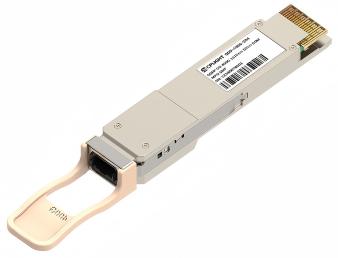
Figure 3: AICPLIGHT 400G Optical Transceiver Module
Advantages: The key benefits of 400G optical modules are high performance and high scalability. They enable long transmission distances for cross-data center and backbone networks. They feature extremely low signal attenuation and very strong anti-interference capability, ensuring high transmission reliability even in complex environments.
Disadvantages: The primary drawbacks of 400G optical modules are cost and power consumption. Both the transceiver module cost and the cost of matching fiber optic cables are far higher than those of all 400G copper cable solutions (DAC/ACC/AEC) and 400G AOC, and transceiver module power consumption is also higher than the copper options.
Comparison of 400G Optical Module vs. DAC vs. ACC vs. AEC vs. AOC
To present the differences of 400G optical modules vs. DAC vs. ACC vs. AEC vs. AOC more intuitively, we compare their transmission distance, cost, power consumption, anti-interference capability, physical characteristics, and core applicable scenarios, helping users quickly match needs.
| Solution Type | Transmission Distance | Cost | Power Consumption | Anti-Interference | Size/Weight | Core Applicable Scenarios |
|---|---|---|---|---|---|---|
| 400G DAC | ≤3m | Lowest | Lowest | Poor | Larger; Heavier | Short-distance interconnection within the rack (server-to-switch, switch-to-switch) |
| 400G ACC | 5-6m | Lower | Lower | General | Larger; Heavier | Short-distance cross-rack interconnection, scenarios requiring distance extension beyond DAC with limited budget |
| 400G AEC | ≤7m | Mid-to-Low | Middle | Good | Middle | High-density DDC (Distributed Data Center) architecture, short-distance high-performance needs |
| 400G AOC | 70m (OM3); 100m (OM4) | Mid-to-High | Mid-to-High | Excellent | Smaller; Lighter | Medium/short-distance cross-room interconnection within the data center, complex electromagnetic environments |
| 400G Optical Module | Hundred-meter to Kilometers | Highest | Higher | Excellent | Modular, Moderate Size | Network backbone interconnection, long-distance transmission across data centers, high-performance needs |
Selection Advice for 400G Network Deployment
Based on the above analysis, the deployment of 400G optical module vs. DAC vs. ACC vs. AEC vs. AOC can be divided into the following scenarios:
If the transmission distance does not exceed 3 meters, 400G DAC is the optimal choice. Its cost is the lowest, and power consumption is extremely low, fully meeting the needs of short-distance high-speed transmission within the rack.
For short cross-rack links (3m to 7m), selection is based on priorities: choose 400G ACC for budget constraints and general needs, or opt for 400G AEC if high signal integrity (due to re-timing/shaping) and high-density cabling space savings are critical.
For medium/short-distance links (7m to 100m) across data center rooms, 400G AOC is the ideal choice. It provides longer distance and superior anti-interference than copper, while its integrated design offers easier deployment and lower cost compared to separate optical modules and patch cables.
For transmission distances exceeding 100m, 400G optical modules are the only viable solution. Choose between 400G multimode transceiver (hundred-meter range) and 400G single-mode transceiver (kilometer-level and up) based on the required link length.
Summary
Selecting the right 400G interconnection is a cost-to-need matching exercise. 400G DAC leads for intra-rack links (cost-effective short reach); 400G ACC/AEC cover short-distance extension (3m to 7m); 400G AOC is ideal for flexible cross-room deployment (7m to 100m); and 400G optical modules are mandated for all long-distance needs (> 100m).


