English
LAN (Local Area Network)
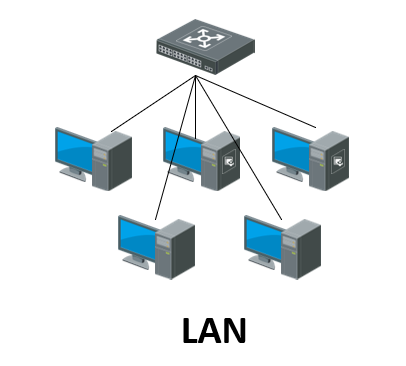
A Local Area Network (LAN) refers to a computer network established within a limited geographical area. Its key characteristics include small coverage range, high transmission speed, stable performance, and easy deployment. Typical LAN implementations connect devices within office buildings, residential complexes and individual work spaces.
As a private network, LANs provide basic protection against data leaks and shielding from external network viruses. Security Note: If the core node is compromised by hackers, it could potentially paralyze the entire network.
Classic example of LAN:
A technology company's New York headquarter and Boston branch office each maintain independent LAN for intra-office connectivity.
WAN (Wide Area Network)
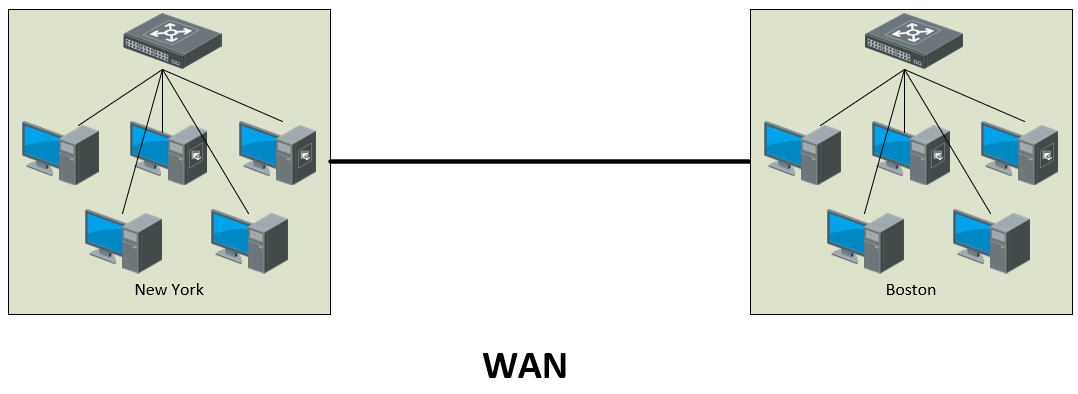
A Wide Area Network (WAN) is a long-distance communication network that connects Local Area Networks (LANs) or Metropolitan Area Networks (MANs) across different geographical regions, such as cities, provinces, or even countries. Its coverage can span tens of kilometers or extend globally.
The internet, as we commonly know it, is a public WAN. Compared to dedicated lines, the internet provides a relatively low-cost connectivity solution.
Classic example of WAN:
The aforementioned technology company plans to interconnect the LANs of its New York headquarters and Boston branch office, enabling employees at both locations to securely and efficiently access shared resources over the internal network.
WLAN (Wireless Local Area Networks)
In the early days of computer networking, communication between devices primarily relied on wired connections. With the maturation and widespread adoption of wireless technology, the Wireless Local Area Network (WLAN) emerged.
Today, WLAN applications are extremely widespread, with Wi-Fi technology being the most mainstream implementation method. Simply deploying a wireless router enables all Wi-Fi-capable devices to connect to the same WLAN, offering advantages such as flexible deployment, convenience, and cost-effectiveness.
VLAN (Virtual Local Area Network)
A Virtual Local Area Network (VLAN) is a technology that segments networks based on logical rather than physical groupings. It divides devices or users connected to the same physical network into different logical groups. Devices in different VLANs remain isolated even if physically adjacent, while devices in the same VLAN can communicate directly as if they were on the same physical segment, regardless of their actual locations.
Classic example of VLAN: The tech company's New York headquarters has multiple departments (e.g., HR, administration, sales, engineering, R&D). When launching a new strategic project requiring cross-departmental team formation, VLAN technology can be employed to group team members into a dedicated VLAN for efficient collaboration while maintaining access to their original departmental VLANs.
VPN (Virtual Private Network)
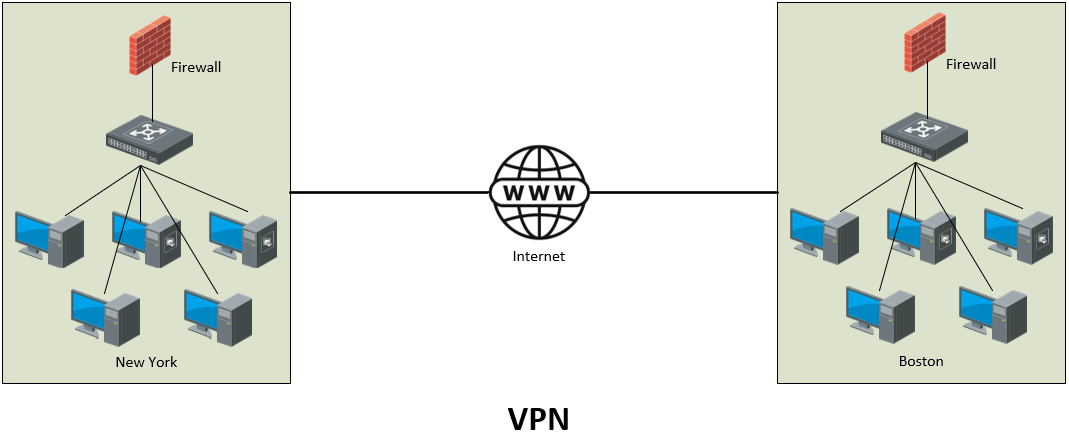
A Virtual Private Network (VPN) creates an encrypted communication tunnel over public networks, enabling secure remote access as if data were transmitted within a private network. VPN technology is widely used in corporate environments. VPN gateways encrypt data packets and modify destination addresses to establish secure remote connections. VPN deployment can be implemented via dedicated servers, hardware appliances, or software clients.
As mentioned earlier, one way to connect the New York and Boston offices involves using an expensive dedicated line, physically isolated from the internet, ensuring high security but with prohibitive costs for many small and medium-sized enterprises.
Another approach involves connecting gateways in New York and Boston directly over the public internet. While internet data transmission is convenient and low-cost but risky due to its openness and lack of inherent encryption, exposing plaintext data to potential breaches.
The solution lies in encrypting data before it leaves the corporate gateway for the internet and decrypting it upon arrival at the destination gateway. This process is transparent to users, who remain unaware of the encryption/decryption. This method of establishing encrypted channels over public networks is the essence of VPN technology.