
 English
As demand for high-speed data center interconnection grows, 400G networks have become mainstream. The QSFP112 optical module, with its cost-effectiveness, low power consumption and strong compatibility, has emerged as a key choice for data center upgrades. This article analyzes it from five core dimensions: definition, advantages, types, application scenarios and comparisons with other 400G optical modules.
I. Definition of QSFP112 Optical Modules
The 400G QSFP112 optical module is an advanced transceiver evolved from traditional QSFP packaging. It achieves 112Gb/s per channel in a 4-channel QSFP configuration, delivering 400G total bandwidth per port. Designed to advance the QSFP 400G ecosystem, it enables traditional QSFP users to smoothly migrate from 100G/200G to 400G networks with minimal time and cost.
Its simplified 4-channel electrical design reduces complexity and power consumption compared to previous multi-channel modules. As part of the RoCE series, it meets modern data centers requirements for low latency and high reliability, supporting diverse high-speed interconnection needs.
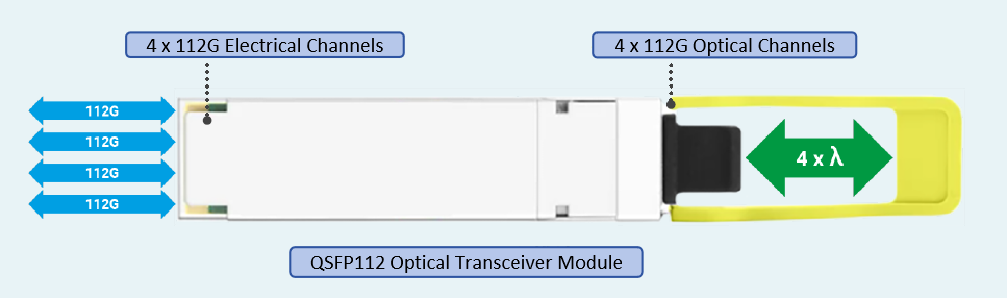
Figure 1: Architecture of QSFP112 Optical Transceiver Module
II. Advantages of QSFP112 Optical Modules
The QSFP112 optical module has become a popular choice in the 400G era due to its comprehensive advantages in speed, power consumption, compatibility, etc.
1. High-speed performance: 400Gbps single-port rate with PAM4 technology (112Gb/s per channel) supports bandwidth-intensive tasks like AI training, large-scale data backup and HD video streaming.
2. Low power consumption: 3.5W lower per module than other 400G transceiver options, with 30% less energy use than QSFP-DD, aligning with data centers green initiatives and cutting power/cooling costs.
3. Strong signal integrity: Optimized transmission paths reduce attenuation and crosstalk, with enhanced EMI protection ensuring stable signals and low error rates in high-density environments.
4. Multi-dimensional compatibility: QSFP112 supports Ethernet, Fibre Channel and InfiniBand protocols; backward compatible with 40G/100G/200G rates; fits QSFP28/QSFP56 slots for seamless integration with existing infrastructure.
5. Cost efficiency: Simplified design lowers production costs, while infrastructure reuse reduces user upgrade expenses, offering superior value.
III. Main Types of QSFP112 Optical Modules
Based on transmission distance, fiber type and use cases, 400G QSFP112 modules are categorized into four types: SR4, DR4, FR4 and LR4.
| Module Type | Fiber Type | Core Technology | Transmission Distance | Interface Type | Power Consumption | Applicable Scenarios |
|---|---|---|---|---|---|---|
| SR4 | Multimode (OM3/OM4) | VCSEL Laser, 4×100G PAM4 | ≤100m | MPO-12 | ≤8W | Intra-data center short-distance connections (server-switch) |
| DR4 | Single-mode (OS2) | EML Laser, 4-channel Parallel Transmission | ≤500m | MPO-12 | ≤6W (LPO) | Medium-short distance intra-data center links (inter-cabinet) |
| FR4 | Single-mode (OS2) | CWDM4 (1270-1330nm) | ≤2km | LC (Duplex) | <10W (Typical) | Spine-leaf architecture, medium-distance interconnection |
| LR4 | Single-mode (OS2) | CWDM4, High-performance EML | ≤10km | LC (Duplex) | 12-14W | Long-distance interconnection between data centers (DCI) |
- 400G QSFP112 SR4: Low-cost multimode option for high-density short-distance connections.
- 400G QSFP112 DR4: LPO support reduces power, ideal for energy-sensitive medium-short scenarios.
- 400G QSFP112 FR4: Balances distance and cost with WDM technology on dual single-mode fibers.
- 400G QSFP112 LR4: Reliable 10km transmission for cross-campus data center interconnection.
IV. Typical Application Scenarios of QSFP112 Optical Modules
Based on the characteristics of different types of 400G QSFP112 optical modules, their application scenarios can be specifically divided into the following four categories:
1.Server-switch short-distance interconnection (≤100m)
In cloud data centers or enterprise private data centers, the distance between servers and access layer switches is usually within 100m, requiring high-frequency data interaction and energy consumption control. QSFP112 SR4 connects GPU servers and access switches in AI clusters, reusing OM4 multimode fibers to cut energy use and upgrade costs.
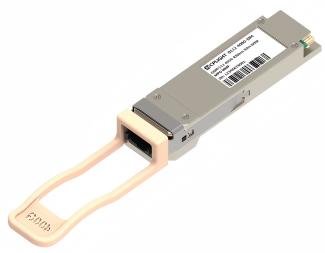
Figure 2: AICPLIGHT 400GBASE-SR4 QSFP112 Optical Transceiver Module
2.Spine-leaf architecture medium-distance links (500m-2km)
Modern data centers mostly adopt the spine-leaf network architecture. The distance between leaf switches and spine switches is usually between 500m and 2km, with strict requirements for latency and bit error rate. QSFP112 DR4 (≤500m) delivers microsecond-level latency for high-frequency trading, while QSFP112 FR4 (500m-2km) ensures stable cross-partition transmission via existing single-mode fibers.
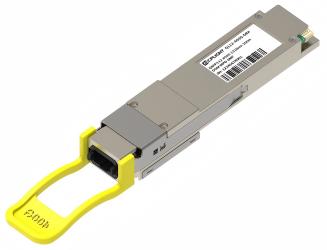
Figure 3: AICPLIGHT 400GBASE-DR4 QSFP112 Optical Transceiver Module
3.Long-distance Interconnection between Data Centers (DCI)
Enterprises need to realize disaster recovery synchronization and resource scheduling between geographically distributed data centers. The transmission distance is often around 10km, with high requirements for reliability and protocol compatibility. QSFP112 LR4 enables 10TB daily data backup with error rates below 1E-12, supporting Ethernet/InfiniBand protocols for multi-architecture compatibility.
4.AI/supercomputing cluster interconnection
In AI training clusters, multiple GPU servers demand real-time data interaction. Meanwhile, computing nodes in supercomputing centers are widely distributed, posing high requirements for bandwidth, latency, and energy consumption—thus necessitating hierarchical adaptation to different distance needs. A hierarchical deployment strategy, leveraging QSFP112 SR4 (for distances ≤100m), QSFP112 DR4 (≤500m), and QSFP112 FR4 (≤2km), not only meets the strict demands for bandwidth, latency, and energy efficiency but also cuts supercomputing centers power consumption by 25%.
V. 400G Transceiver Comparison: QSFP112 vs QSFP-DD vs OSFP
In the current 400G optical module market, QSFP-DD, OSFP and QSFP112 are the mainstream types. There are significant differences among the three in technical characteristics, advantages, disadvantages and applicable scenarios, as detailed below:
1.Core Characteristics Comparison
| Module Type | Technical Architecture | Advantages | Disadvantages |
|---|---|---|---|
| QSFP-DD | Dual-row 8-channel (based on QSFP28 size) | 1. Strong compatibility: Existing QSFP28 modules can be directly used; 2. High density: 1U chassis supports 36 ports; 3. Cost advantage: Mature supply chain and low unit cost. | 1. Latency and packet loss: Protocol conversion between PAM4/NRZ is required for compatibility with old modules, introducing about 2μs latency and 0.1% packet loss rate; 2. Difficult cooling: 8-channel integration results in a heat density of 15W/cm², requiring liquid cooling at high temperatures. |
| OSFP | Wide-body metal package + integrated heatsink | 1. Excellent heat dissipation: Thermal resistance as low as 0.5℃/W, adapting to high-power modules above 15W; 2. Scenario adaptation: Solves the overheating problem of network adapters in NVIDIA GPU clusters, with high reliability in 40km metro DCI scenarios. | 1. Low density: Port density reduced to 32 ports per 1U; 2. Ecosystem limitations: Tied to specific switch architectures such as Spectrum-4; 3. High cost: Relies on CNC precision machining, 15% lower yield and about 20% price premium. |
| QSFP112 | QSFP28 framework + 4-channel 112G PAM4 | 1. Wiring cost reduction: Multimode fiber reduced from MPO-24 to MPO-12, cost reduced by 50% and failure rate reduced from 7% to 1.5%; 2. Low energy consumption: Power consumption <10W, alleviating data center cooling pressure. | 1. Distance limitation: Multimode transmission is strictly limited within 30m; 2. Equipment dependence: Mandatory matching with 112G SerDes network cards, old equipment cannot be reused. |
2. Scenario-based Selection
(1) Data Center ScenariosQSFP-DD: Remains the market cornerstone. With high density, strong compatibility and comprehensive cost-effectiveness, it is suitable for customers requiring phased upgrades and high compatibility, occupying the mainstream 400G market in data centers.
QSFP112: Excels in short-distance scenarios. QSFP112 dominates intra-cabinet scenarios with density/power advantages (supported by Huawei/Cisco).
(2) Metro/Telecom Scenarios
OSFP: Takes the lead. Its medium-long distance transmission capability (e.g., 400G ER4/ER8) and heat dissipation redundancy design make it the preferred solution for operator DCI and high-performance GPU liquid-cooled clusters.
(3) Computing Power Scenarios
QSFP112: It builds a cost advantage through short-distance interconnection within cabinets (35% reduction in material costs), reduces reliance on NVIDIA ecosystem.
Summary
The QSFP112 optical module stands out in 400G networks with its high speed, low power consumption, strong compatibility and cost efficiency. Covering 100m-10km transmission via four module types, it serves key scenarios including intra-data center connections, spine-leaf architecture, inter-data center DCI and AI/supercomputing interconnection.
Compared to QSFP-DD and OSFP, it offers better value in fixed-rate 400G environments, especially for traditional QSFP users. As 400G demand expands in AI, cloud computing and big data, the QSFP112 will continue optimizing distance and compatibility, driving high-speed, green network development as a core 400G ecosystem component.


