Introduction
In high-performance network scenarios such as data center interconnects and long-haul backbone transmissions, 400G coherent links have emerged as the core solution due to their ultra-large bandwidth and low-latency advantages. The Bit Error Rate (BER), a critical metric for assessing link transmission quality, directly determines data reliability and stability. Excessive BER can trigger data retransmission, link failures, and severe service disruptions. Therefore, accurately understanding BER, diagnosing its root causes, and implementing optimizations are central to the deployment and maintenance of 400G long-haul links.
1. BER of Optical Module
1.1 What is BER?
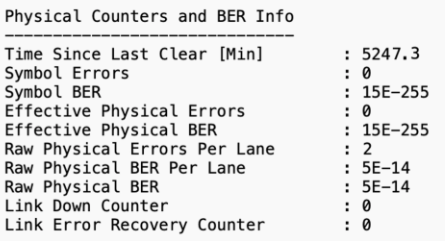
Bit Error Rate (BER) is a fundamental metric for evaluating the reliability of digital transmission systems, defined as the ratio of erroneous bits to the total transmitted bits. In 400G long-haul coherent links, BER is typically expressed at extremely low magnitudes (e.g., 1×10⁻¹²), meaning only 1 bit error is allowed per trillion transmitted bits. This metric reflects the integrity of optical signals from transmitter to receiver. A lower BER indicates higher link transmission quality. For coherent optical modules, BER must comply with industry standards and service thresholds. Exceeding these thresholds triggers the FEC mechanism, potentially causing data retransmission or link interruptions. Consequently, BER is a core monitoring parameter in 400G long-haul transmission operations and maintenance.

1.2 How BER Occurs
BER arises from interference during optical signal transmission and detection, causing the receiver to misinterpret the original signal. In 400G coherent links:
- Transmitter Side: Laser devices generate optical signals carrying digital data.
- Fiber Transmission: Signal distortion occurs due to medium properties and environmental factors.
- Receiver Side: Coherent detection modules convert signals back to electrical form but introduce noise.
When combined distortion and noise surpass the signal recognition threshold, bit errors occur (e.g., "0" misread as "1" or vice versa). The high sensitivity of coherent detection makes 400G links particularly susceptible to signal distortion and noise, making them a key scenario for BER generation.
Primary BER Contributors in 400G Coherent Links:
- Optical Module Factors: Device aging, improper parameter configuration.
- Fiber Link Factors: Fiber attenuation, connector contamination, or end-face scratches.
- External Environmental Factors: Electromagnetic interference, extreme temperature fluctuations.
These factors interact cumulatively, collectively impacting BER performance in 400G coherent systems.
2. BER Testing and Validation for 400G Links
2.1 Real-Time Monitoring Metrics and Test Tools for Coherent Links
Real-time monitoring of coherent links requires tracking BER-critical metrics, including:
- OSNR (Optical Signal-to-Noise Ratio): Directly reflects signal-noise separation and is a key determinant of BER.
- Optical Power: Must be maintained within the module's operational threshold to avoid distortion from over/under-power conditions.
- Dispersion Accumulation: Excessive chromatic dispersion degrades signal integrity.
- FEC (Forward Error Correction) Counts: Indicates the frequency of error corrections, indirectly revealing BER trends.
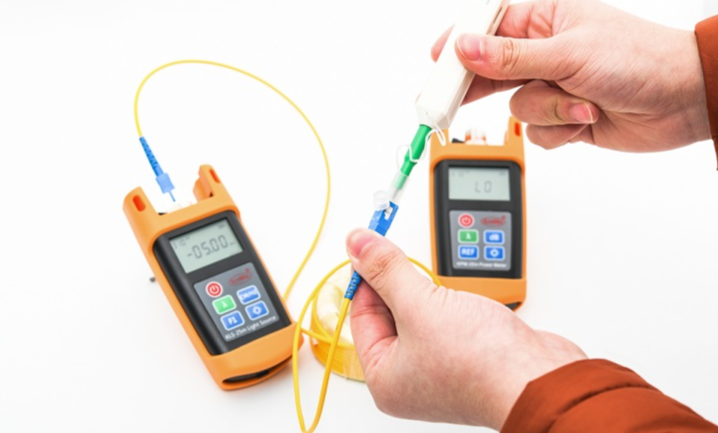
Common Test Tools:
- Coherent Optical Performance Analyzer: Measures OSNR, modulation quality, and phase noise.
- High-Speed Bit Error Rate Tester (BERT): Validates BER performance under stress conditions.
- Optical Time-Domain Reflectometer (OTDR): Locates fiber faults, splice losses, and attenuation spikes.
- Optical Spectrum Analyzer (OSA): Assesses wavelength stability and noise levels.
These tools enable comprehensive link diagnostics and root-cause analysis for BER issues.
2.2 Complete Fiber Link Testing Procedure
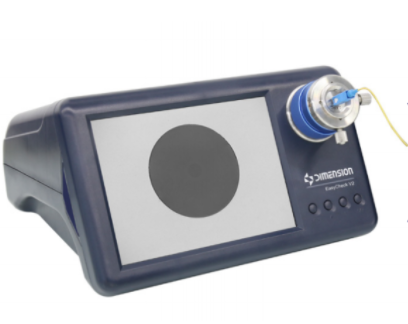
A systematic testing workflow ensures reliable 400G long-haul deployment:

Step 1: Link Pre-Treatment
- Clean fiber connector end-faces to eliminate contamination.
- Verify connector insertion loss and physical integrity.
Step 2: Optical Power Validation
- Measure Tx (transmitter) output power and Rx (receiver) input power.
- Calculate total link attenuation to ensure compliance with budget.
Step 3: Dispersion and PMD Testing
- Use a dispersion analyzer to quantify chromatic dispersion accumulation.
- Confirm values are within the module's compensation range (e.g., DSP-based correction).
Step 4: OTDR Trace Analysis
- Map attenuation distribution along the fiber span.
- Identify localized losses at splices, connectors, or bends.
Step 5: BER Validation
- Conduct prolonged BER tests under operational conditions (e.g., 24+ hours).
- Correlate results with FEC counts and module health indicators.
Documentation: Record all test data (e.g., power levels, dispersion maps) to support future troubleshooting.
3. BER Optimization for 400G Long-Haul Links
3.1 FEC Technology
Forward Error Correction (FEC) is a cornerstone for BER optimization in 400G long-haul links. By embedding redundant error-correcting codes at the transmitter, FEC enables the receiver to autonomously correct bit errors without retransmission, significantly enhancing link reliability.
For 400G coherent transmission scenarios, SD-FEC and LDPC (Low-density Parity-check) are mainstream choices. Compared to traditional hard-decision FEC, they offer a 3-5dB improvement in error correction capability, reducing the pre-FEC BER from 1×10⁻³ to below 1×10⁻¹⁵ at the post-FEC stage. During deployment, FEC coding gains must be matched to link length. Enhanced FEC configurations can be enabled for long-distance transmission while balancing error correction latency and bandwidth overhead. This ensures maximized BER optimization without compromising service performance, representing a key technology for addressing excessive BER in fiber links.
3.2 Environmental and Operational Impacts
Environmental fluctuations and improper operations are major contributors to BER degradation, requiring targeted mitigation:
Environmental Controls:
- Temperature Stability: Maintain ambient temperature at 10–35°C to prevent laser threshold drift and fiber property changes. Deploy active thermal management systems.
- EMI Shielding: Isolate optical modules ≥30 cm from power cables/radio devices; use shielded fiber jumpers to suppress noise.
Operational Practices:
- Fiber Maintenance: Regularly clean connectors with specialized tools to avoid contamination/scratches causing reflection loss.
- Process Compliance: Enforce standardized module handling (e.g., gentle insertion) and automated configuration checks to prevent signal degradation.
3.3 External Link Loss Compensation
To counter fiber attenuation and dispersion in 400G long-haul transmission, external compensation is critical.
Attenuation Mitigation:
- EDFA (Erbium-Doped Fiber Amplifier): Compensates for power loss, ensuring received optical power stays within the module's sensitivity range.
- Distributed Amplification: Prevents nonlinear distortions from concentrated amplification (e.g., Raman amplification combined with EDFA).
Dispersion Management:
- Dispersion-Compensating Fiber (DCF) or Tunable Dispersion Compensators: Align cumulative dispersion with the DSP's correction capability.
- Proactive Monitoring: Track performance of compensation devices and replace aged components (e.g., degraded EDFA pumps).
4. Frequently Asked Questions (FAQ)
Q1: What are the top priorities for troubleshooting BER issues in 400G long-haul links?A: Prioritize investigating three core factors: First, the physical condition of the fiber link (connector contamination, splice loss, fiber breakage), which can be quickly located using an OTDR. Second, the operating parameters of the optical module (transmit power, receive sensitivity, modulation format matching), verifiable through the module diagnostic interface. Third, the optical signal-to-noise ratio (OSNR), which must be ≥20dB; if insufficient, compensation can be achieved via an amplifier.
Q2: How to quickly determine whether BER issues are caused by module failure or fiber link problems?
A: Perform a swap test: Replace the suspected faulty module with a known good one. If BER returns to normal, the issue lies with the module (e.g., laser aging, detector failure). If BER remains excessive, use an OTDR to test the fiber link's attenuation profile and dispersion values, investigating link loss or physical damage.
English
