Introduction
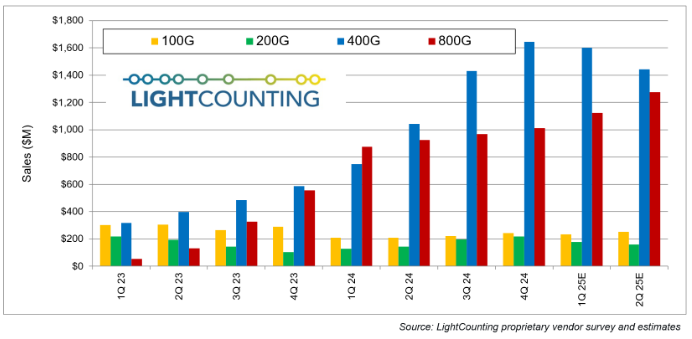
In recent years, the explosive growth of artificial intelligence and cloud computing has driven a surge in demand for high-speed interconnects in data centers. 800G optical modules have entered the stage of large-scale deployment, becoming a core enabler of massive data transmission. However, traditional discrete optical solutions and EML-based modules face bottlenecks such as high costs, excessive power consumption, and low integration density, making them ill-suited for high-density computing clusters.
Silicon photonics (SiPh), leveraging its compatibility with CMOS processes and the advantages of photonic integrated circuits (PICs), has demonstrated disruptive potential in cost reduction and energy efficiency, gradually emerging as the dominant technical path for 800G optical modules.
1. Silicon Photonics Technology and 800G Optical Modules
1.1 Overview of Silicon Photonics Technology
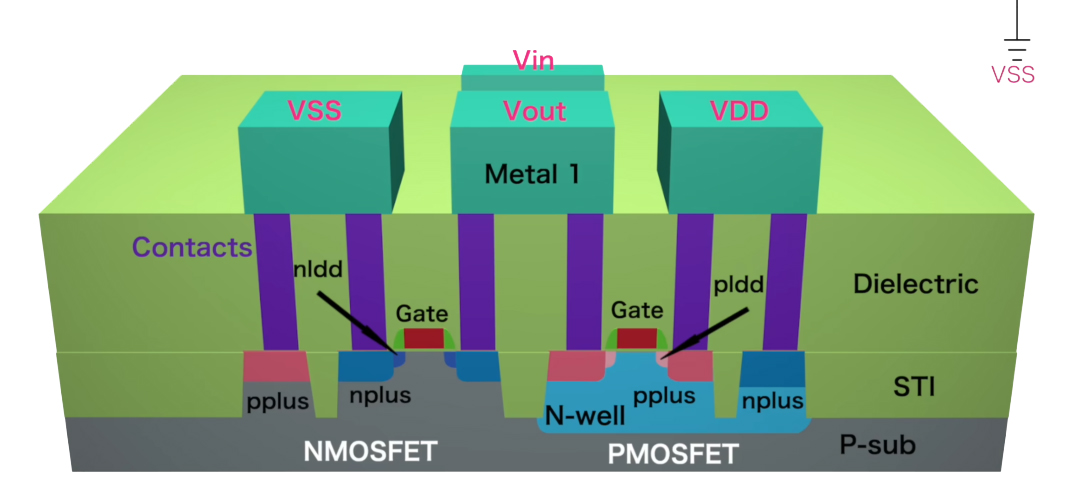
Silicon photonics (SiPh) is a cross-disciplinary integration of silicon-based semiconductor and optical communication technologies. Leveraging silicon's optical transparency and compatibility with CMOS processes, it integrates active/passive photonic devices onto SOI substrates to enable optical signal transmission, modulation, and detection. Compared to traditional III-V compound semiconductors (e.g., InP, GaAs), its breakthrough advantage is solving the challenge of large-scale photonic integration while leveraging mature microelectronic manufacturing to reduce costs.
Key physical mechanisms of SiPh:
-
Electro-optic modulation based on the plasma dispersion effect.
-
Low-loss (≤0.1 dB/cm) micron-scale optical waveguides constructed by exploiting the refractive index contrast between silicon and silicon dioxide.
Core components encompass Mach-Zehnder modulators (MZMs), germanium-integrated photodetectors, wavelength-division multiplexing units, and external continuous-wave (CW) lasers. Its scalability and high integration density provide critical support for high-speed optical modules.
1.2 Application of SiPh in 800G Optical Modules
As the backbone of high-speed data center interconnects, 800G optical modules must meet demands for high bandwidth density, low power consumption, and cost efficiency. Silicon photonics technology has emerged as the mainstream solution through precise adaptation. Architecturally, the "8×106.25Gbps PAM4" parallel scheme is widely adopted, integrating 8 modulation channels and waveguides into single/dual chips via PICs.
Core value of SiPh is reflected in three aspects:
-
Integration: For example, 800G OSFP DR8 modules achieve 500m transmission with <18W power consumption and a TDECQ of 3.4dB.
-
Cost Optimization: CMOS mass production combined with linear-drive pluggable optics (LPO) technology eliminates DSP, reducing BOM costs by 20–40%.
-
Low Power Consumption: SiPh consumes over 30% less power than traditional EML-based modules, aligning with data center thermal management requirements.
Currently, SiPh is widely deployed in spine-leaf switch interconnects and AI computing clusters. Vendors like Accelink have achieved mass production with solutions such as 2×FR4 SiPh modules.
2. PIC vs Discrete Optics
2.1 Cost Analysis of Traditional Discrete Optical Modules
The cost structure of traditional discrete 800G optical modules is dominated by three key factors:
-
Core Component Costs: Optical chips account for 50–70% of total costs. High-end III-V chips (e.g., InP/GaAs) rely on imports, with foreign suppliers controlling 90% of the market, leading to weak bargaining for buyers.
-
Packaging and Assembly Costs: Discrete TOSA/ROSA components require individual packaging and precise optical alignment (manual or machine-assisted), resulting in complex processes, yield losses, and elevated costs.
-
Supply Chain and Testing Costs: Multi-vendor sourcing increases compatibility validation expenses, while per-channel testing is time-consuming, contributing 10–15% of total costs.
-
Material and Customized Costs: the scarcity of III-V materials and custom production models limit economies of scale, creating long-term cost bottlenecks.
2.2 Cost Analysis of Silicon Photonics
Silicon photonics achieves cost optimization through three mechanisms:
-
CMOS Compatibility: Leveraging existing 8/12-inch wafer production lines reduces chip costs by >40% per unit area, eliminating the need for dedicated facilities.
-
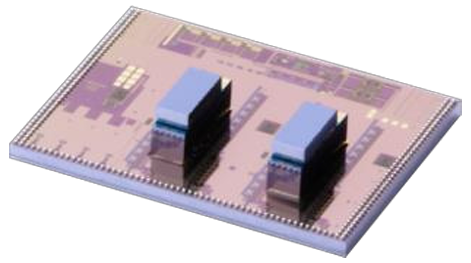
PIC Integration: Monolithic integration of modulators, detectors, and waveguides on a single chip cuts packaging costs by 30–50% by removing discrete component assembly.
-
Material and Scale Benefits: Abundant silicon supply and LPO (Linear Drive Pluggable Optics) technology—which removes DSP chips—reduce BOM costs by 20–40% compared to discrete solutions.
Though heterogeneously integrated lasers require upfront R&D investment, mass production significantly dilutes these costs, ensuring long-term advantages.
2.3 TCO Comparison: Silicon Photonics vs. Discrete 800G Transceivers
Silicon photonics demonstrates superior Total Cost of Ownership (TCO):
-
Procurement Costs: Initial SiPh module prices are 5–10% higher, but mass production reverses this trend.
-
Operational Costs: 30–50% lower power consumption saves millions in electricity over 5 years for 10,000-unit deployments.
-
Maintenance Costs: PIC integration boosts mean time between failures (MTBF) to >1 million hours, cutting replacement and downtime expenses by ≥25%.
Conclusion: In data centers, 800G SiPh modules offer 18–25% lower lifecycle TCO than discrete alternatives, with scaling benefits for high-density AI clusters.Compared with other approaches like
CPO vs LPO optical interconnects, silicon photonics offers a balanced path between performance and manufacturability.
3. Applications of Silicon Photonics in Data Centers
3.1 Demand for 800G Optical Modules in Data Centers
The rapid development of AI large-scale model training and cloud computing has led to exponential growth in data center bandwidth requirements. 800G optical modules have become the core solution for addressing high-density interconnection bottlenecks.
A single large model training session needs to process petabytes (PB) of data, while GPU cluster cross-node communication imposes strict requirements on transmission rates and latency. Traditional 400G modules can no longer meet the expanding computing power requirements.
From a deployment perspective, short-distance scenarios (100m-2km) like leaf-spine switch interconnects and rack-to-rack D2D communication present the most urgent demand for 800G modules. Additionally, the "East Data West Computing" policy initiative necessitates high-speed optical modules to support cross-regional data center interconnections.
Industry data indicates that the global high-speed data communication optical module market will reach $9 billion in 2024, with AI computing power contributing over 60% of the growth. More than 70% of communication service providers plan to deploy 800G modules, signaling a full-scale surge in demand.
3.2 Advantages of 800G Silicon Photonics Technology
800G silicon photonics technology precisely meets core data center requirements with three key advantages:
3.2.1 High Integration
-
PIC technology integrates multi-channel devices on a single chip
-
Reduces size by 40% compared to discrete solutions
-
Ideal for high-density deployment in server racks
3.2.2 Low Power Consumption
-
30-50% lower energy use than traditional EML-based modules
-
1.6T silicon photonics modules achieve actual measured power consumption of just 18W
-
Meets data center PUE≤1.2 energy efficiency requirements
3.2.3 CMOS Process Compatibility
-
Supports mass production at scale
-
Strong resistance to electromagnetic interference
-
Optical signal latency reduced by 90% compared to electrical signals
-
Compatible with LPO/CPO technology evolution
Additionally, silicon photonics modules exhibit strong electromagnetic interference resistance, reduce optical signal delay by 90% compared to electrical signals, and align with LPO/CPO technology evolution. This establishes them as the optimal technical path for AI computing cluster interconnects, while reserving scalability for future upgrades to 1.6T/3.2T.For a broader view of how these technologies shape AI infrastructure, see our
AI data center network upgrade guide.

 English