
 English
In the rapidly evolving high-speed networking landscape, data center upgrades often face compatibility challenges between legacy and new equipment with differing technical standards. Efficiently adapting low-speed modules to high-speed ports or bridging connections between different form factors has become a critical task for network engineers. This is where Converter Optical Modules (CVR) come into play. This article provides an in-depth analysis of CVR modules—their definition, types, working principles, and core advantages—to help you make flexible and cost-effective deployment choices.
1. What is a CVR Optical Module?
CVR stands for Converter. As a specialized category of optical modules, CVRs contain neither optical components (like lasers or receivers) nor fiber interfaces.
Their primary function is to act as a bridge between different port form factors and network speeds. These modules allow high-density, high-bandwidth modern network equipment to accommodate and utilize optical modules with different packaging formats or lower speeds. Whether downgrading high-speed ports for low-speed compatibility or interconnecting high-speed modules with differing standards, CVRs significantly enhance network configuration flexibility and asset utilization.
2. Types of CVR Modules
Optical modules have evolved over decades, with each speed breakthrough spawning multiple form factors. For instance:
- 10G Era: While SFP+ now dominates, early standards included X2, XENPAK, and XFP.
- 100G Era: QSFP28 is mainstream today, but CFP, CFP2, and CXP were pioneers.
2.1 Same-Rate CVR Modules
Same-rate CVR modules address form factor compatibility while maintaining identical speeds.
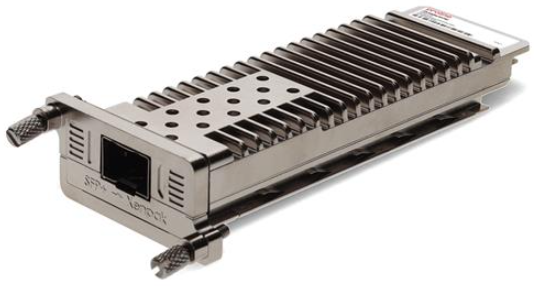
2.1.1 10G XENPAK to 10G SFP+
- XENPAK: The first standardized 10GbE pluggable module (defined by XENPAK MSA in 2001). Its large size limited 1U panels to 4 ports.
- 10G XENPAK to 10G SFP+: Due to its large form factor, XENPAK could accommodate only up to four modules in a 1U panel, leading to its eventual replacement by the smaller SFP+. However, numerous legacy devices still feature XENPAK ports requiring 10GE connectivity with newer equipment equipped with SFP+ ports. This necessitated the development of 10G XENPAK to 10G SFP+ conversion modules.
2.1.2 10G X2 to 10G SFP+
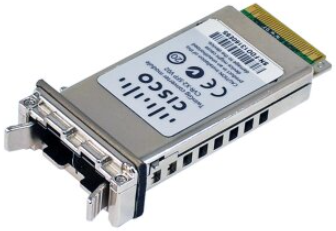
- X2: A compact successor to XENPAK (half the size) defined by X2 MSA in 2004, still bulkier than SFP+ (2006).
- Role: Enables migration from X2-based infrastructure to SFP+ ecosystems.
2.1.3 100G CFP to 100G QSFP28
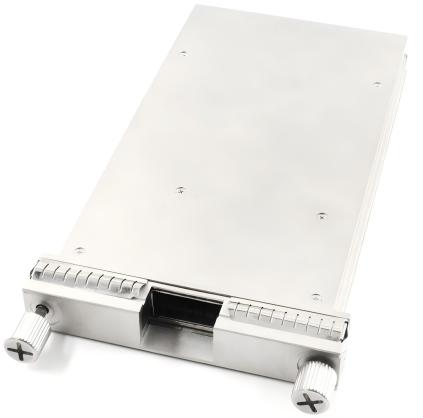
CFP was the earliest pluggable module standard to achieve 100Gbps transmission, designed in 2009. It initially employed a 10 x 10 configuration to attain 100G speeds. Due to its larger size and higher power consumption, it is better suited for transmission networks and carrier-grade equipment where port density requirements are less stringent.
The 100G CFP to 100G QSFP28 conversion module offers two hardware variants based on the paired QSFP28 optical module type:
- Type A: For SR4/CWDM4/eCWDM4/PSM4 QSFP28 modules.
- Type B: For LR4/ER4 QSFP28 modules.
2.2 Multi-Rate CVR Modules
Different-rate CVR modules primarily enable speed downgrade compatibility, allowing high-speed ports to interoperate with low-speed modules.
2.2.1 40G QSFP+ to 10G SFP+
The 40G QSFP+ to 10G SFP+ CVR optical module enables the use of SFP or SFP+ packaged optical modules or cables on high-speed switch ports that only support QSFP packaging. It works by extracting one channel from the four signals on the QSFP port for conversion.
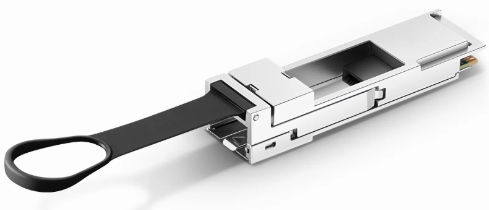
Notably, it supports not only 10G SFP+ but also 1G SFP, enabling 40G to 1G down-speed applications.
2.2.2 100G QSFP28 to 25G SFP28
The 100G QSFP28 to 25G SFP28 operates similarly to the 40G QSFP+ to 10G SFP+ mechanism, but it is exclusively compatible with 25G SFP28 optical modules. It cannot be used with 10G SFP+ or 1G SFP modules.
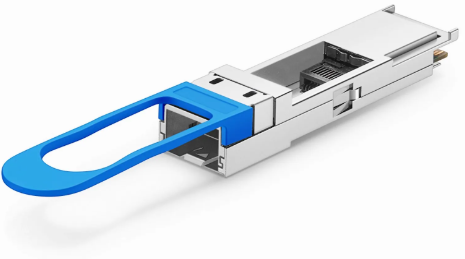
Since 25G SFP28 modules operate near the speed limit of NRZ modulation, they typically integrate CDR (Clock and Data Recovery) functionality and require FEC (Forward Error Correction) support from the receiving equipment during transmission. These features are absent in 10G SFP+ and 1G SFP modules, making them incompatible.
2.2.3 400G OSFP to 100G QSFP28
As 400G switches increasingly become mainstream in large enterprise data centers, their port formats vary, including OSFP, QSFP-DD, and QSFP112.
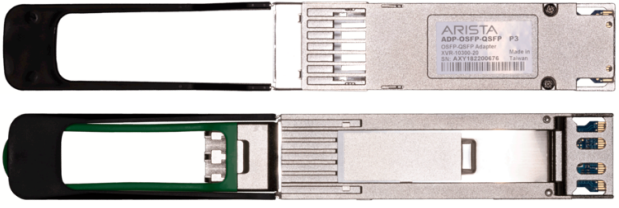
Both QSFP-DD and QSFP112 belong to the QSFP family, offering excellent forward compatibility. Consequently, 100G QSFP28 optical modules can be directly installed in QSFP-DD or QSFP112 switches.
However, due to its larger form factor, OSFP cannot directly accommodate 100G QSFP28 optical modules. Therefore, a 400G OSFP to 100G QSFP28 CVR optical module is required to achieve compatibility.
3. CVR Module Usage
Operation: Simply insert the smaller-form-factor module (e.g., SFP+) into the CVR's interface. For example: A 10G SFP+ module plugged into a QSFP±to-SFP+ CVR enables 40G→10G connectivity.
Key Notes:
- Role: CVR acts as a signal converter only—no optical processing.
- Distance: Determined by the inserted module (e.g., 40km for 10G SFP+ ER vs. 300m for 10G SFP+ SR).
4.CVR Application Diagram
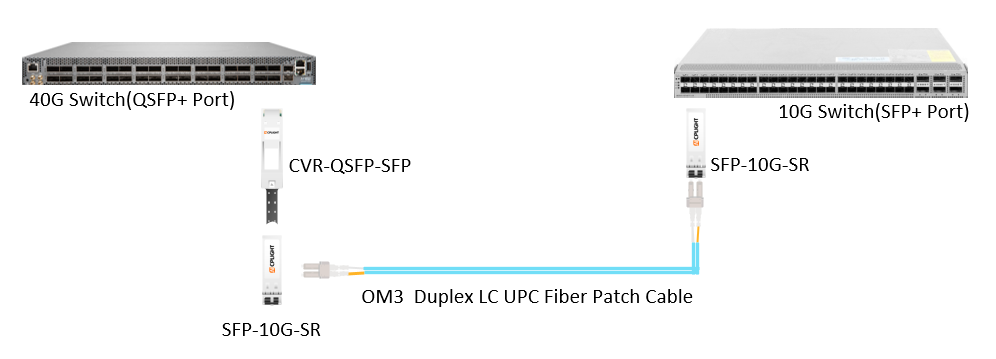
5.CVR Advantages
5.1 Enhanced Equipment Utilization
- Value: Extends the lifespan of legacy devices (e.g., XENPAK/X2 switches) by bridging them to modern infrastructure.
- Cost Savings: Avoids expensive "rip-and-replace" upgrades.
5.2 Speed Downgrade Flexibility
- Use Case: Deploy 1G/10G SFP/SFP+ modules in 40G/100G QSFP+/QSFP28 ports.
- Example: Reuse existing 10G DAC cables in 40G switches via CVR.
5.3 Strong Interoperability
- Solution: Mix QSFP28, CFP, and OSFP modules in the same chassis.
- Scenario: Gradually migrate from 100G CFP to QSFP28 without full hardware overhaul.
5.4 Plug-and-Play Deployment
- Ease: Tool-free insertion/removal of CVR and host modules.
- Maintenance: Simplifies field swaps and topology adjustments.
5.5 Reduced Power Consumption
CVR optical modules function solely as signal converters, resulting in extremely low power consumption. In contrast, larger, earlier-generation optical modules often consume significantly more power.


