Solution
The client ultimately contacted AICPLIGHT. Our technical team responded swiftly and initiated efficient troubleshooting. Before accessing the client's remote environment, we deployed AICPLIGHT's proprietary "Optical Module No-Link Pre-Diagnosis Protocol" to guide the client through preliminary tests and narrow down the issue.
1. Pre-Diagnosis: Rapid Fault Isolation
We instructed the client to perform Loopback tests on the equipment and collect logs. Results revealed:
- RuiJie RG-S6500 ↔ RuiJie RG-S6500: Link Up (normal connection)
- NVIDIA Jetson Thor ↔ NVIDIA Jetson Thor: Link Up, but rate limited to 25G/s
- RuiJie RG-S6500 ↔ NVIDIA Jetson Thor: No Link
2. Root Cause Analysis
Analysis 1: The NVIDIA Jetson Thor platform's physical 100GE QSFP28 port operates as four logical 25GE interfaces (visible via ip a as mgbe0_0, mgbe1_0, mgbe2_0, mgbe3_0) according to the product manual.
- Hypothesis: Port mode mismatch between devices.
- Action: Configured the RuiJie RG-S6500's 100GE port to Split 4x25G mode.
- Result: Link still failed to establish.

Analysis 2: DDM data from AICPLIGHT's QSFP-100G-SR4 modules on both ends confirmed all parameters were normal, ruling out the possibility of optical module hardware failure.
- New Hypothesis: The issue centers on inconsistent default configurations between the two end ports.
3. Resolution
According to AICPLIGHT's years of accumulated experience documented in the Optical Module No Link Failure Summary Manual, problems caused by inconsistent port default configurations are typically related to Auto-Negotiation, duplex mode, and FEC mode. In 25GE port scenarios, mismatched FEC mode is the most common issue.

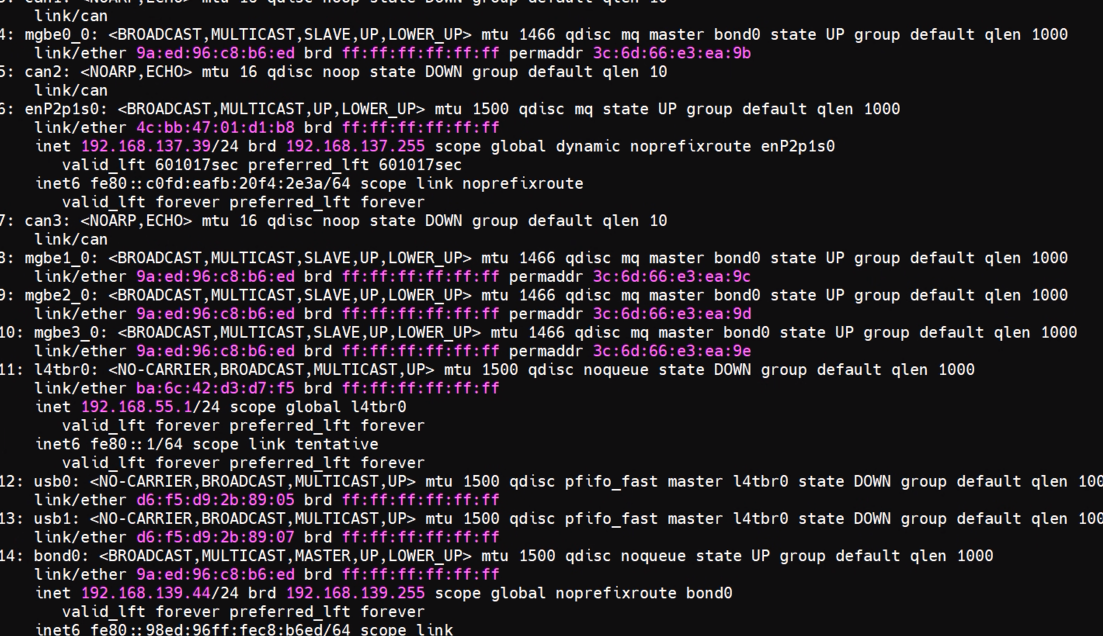
With client authorization, AICPLIGHT technicians remotely adjusted the FEC mode configuration on ports Hundred Gigabit Ethernet 0/50:1~4 of the RuiJie RG-S6500 switch. Following configuration completion, both end ports instantly achieved Link Up.
4. Performance Optimization
Though the link was functional at 4x25GE, transmitting traffic still failed to meet the customer's high-performance requirements. The customer requested further implementation of 100G aggregated rate transmission.
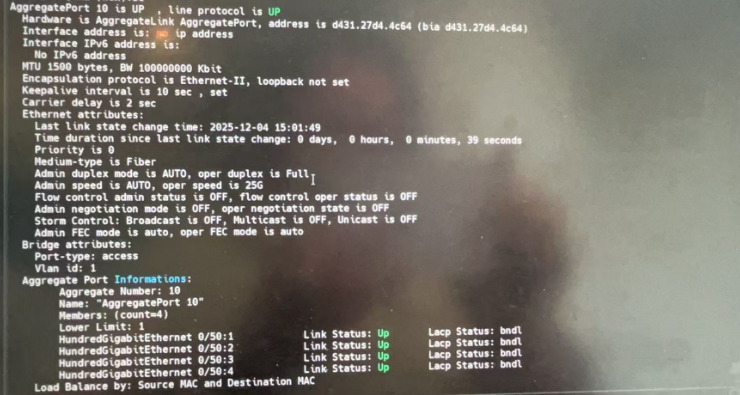
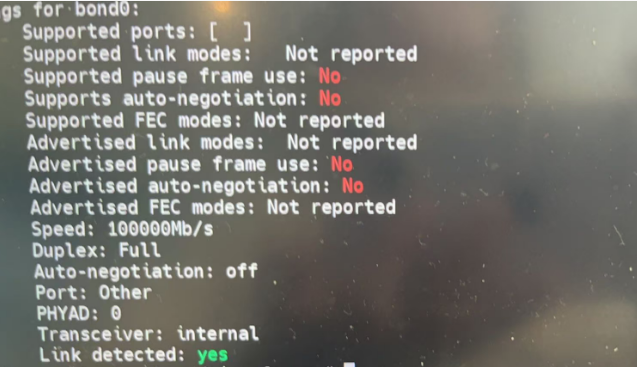
AICPLIGHT proposed and implemented a LACP + Linux Bonding solution to achieve bandwidth aggregation, successfully enabled 100G transmission rates, delivering the desired outcome for the customer.

 English


