


8 × 400GbE RoCE Connectivity
Eight ConnectX-7 400GbE Ethernet links per DGX B200 provide high-bandwidth GPU-to-GPU communication.

Build a scalable, 1:1 non-blocking RoCEv2 Ethernet fabric for B200 AI clusters with 400GbE connectivity.
Start Your B200 RoCE Fabric DesignShare your B200 cluster size, NIC configuration, target topology, and deployment requirements.
400GbE RoCE Fabric Overview
DGX B200 compute systems, NVIDIA Spectrum-4 SN5400 switches, and matched 400GbE Ethernet interconnects form a scalable RoCEv2 fabric for distributed AI workloads.

Eight ConnectX-7 400GbE Ethernet links per DGX B200 provide high-bandwidth GPU-to-GPU communication.
Each SN5400 Leaf switch allocates 32 × 400GbE ports to servers and 32 × 400GbE ports to Spine uplinks, maintaining equal downlink and uplink capacity.
PFC for the RoCE traffic class, together with ECN and QoS, helps control congestion and protect RDMA traffic across the Ethernet fabric.
A two-level, 1:1 non-blocking RoCE fabric for B200 GPU clusters.
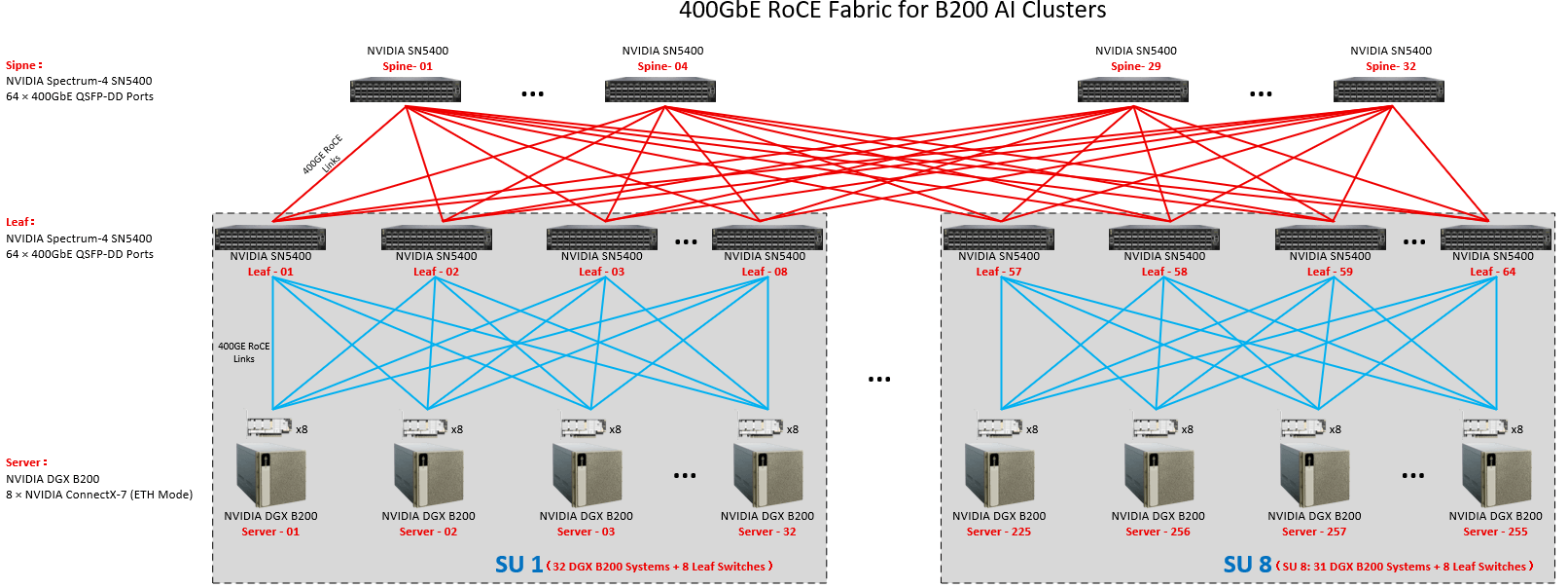
Components for the B200 400GbE RoCE fabric.


WHY AICPLIGHT
Solution design, validated products, and dedicated project support.
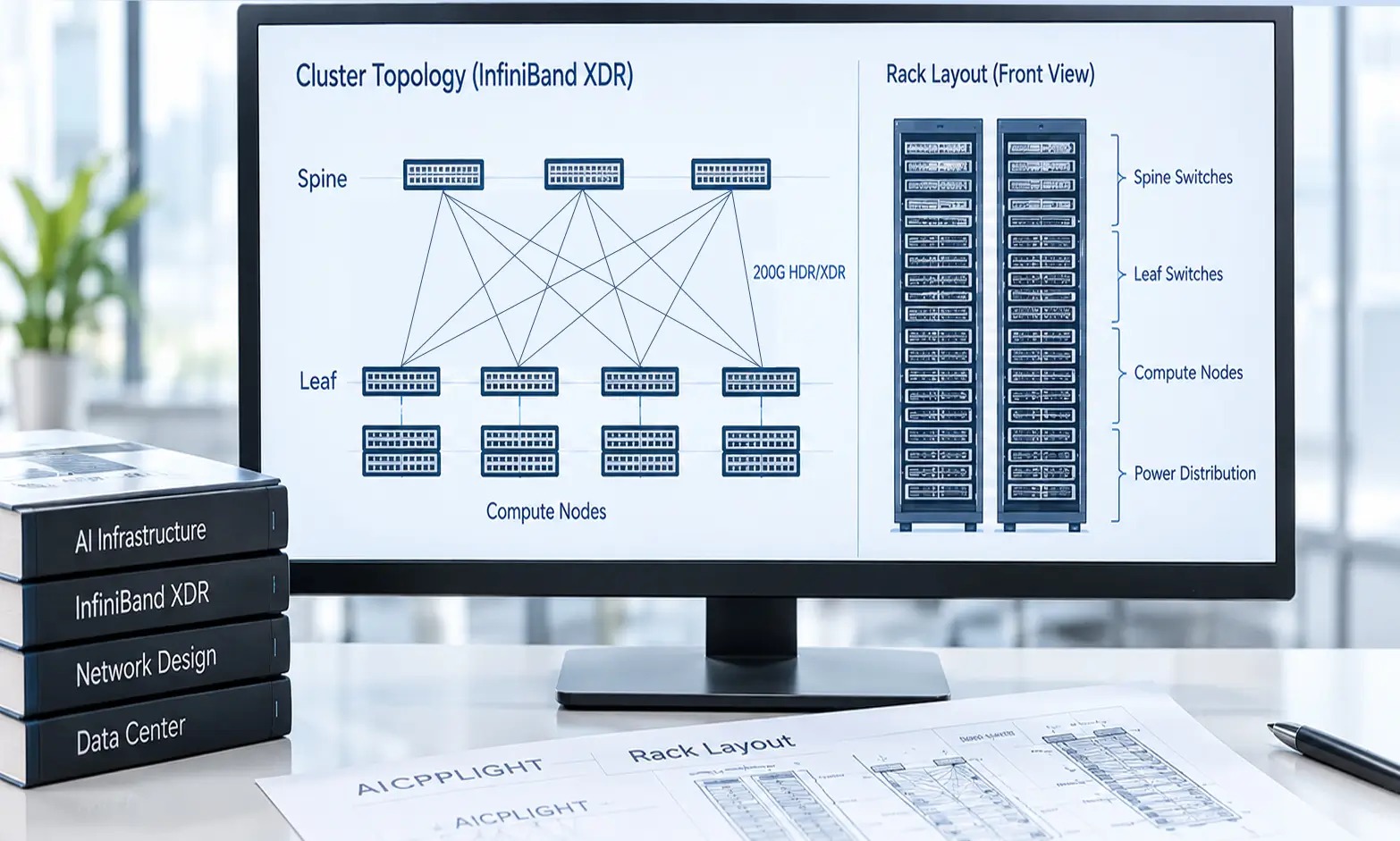
A tailored solution architecture and matched product plan based on your requirements, site conditions, and deployment goals.
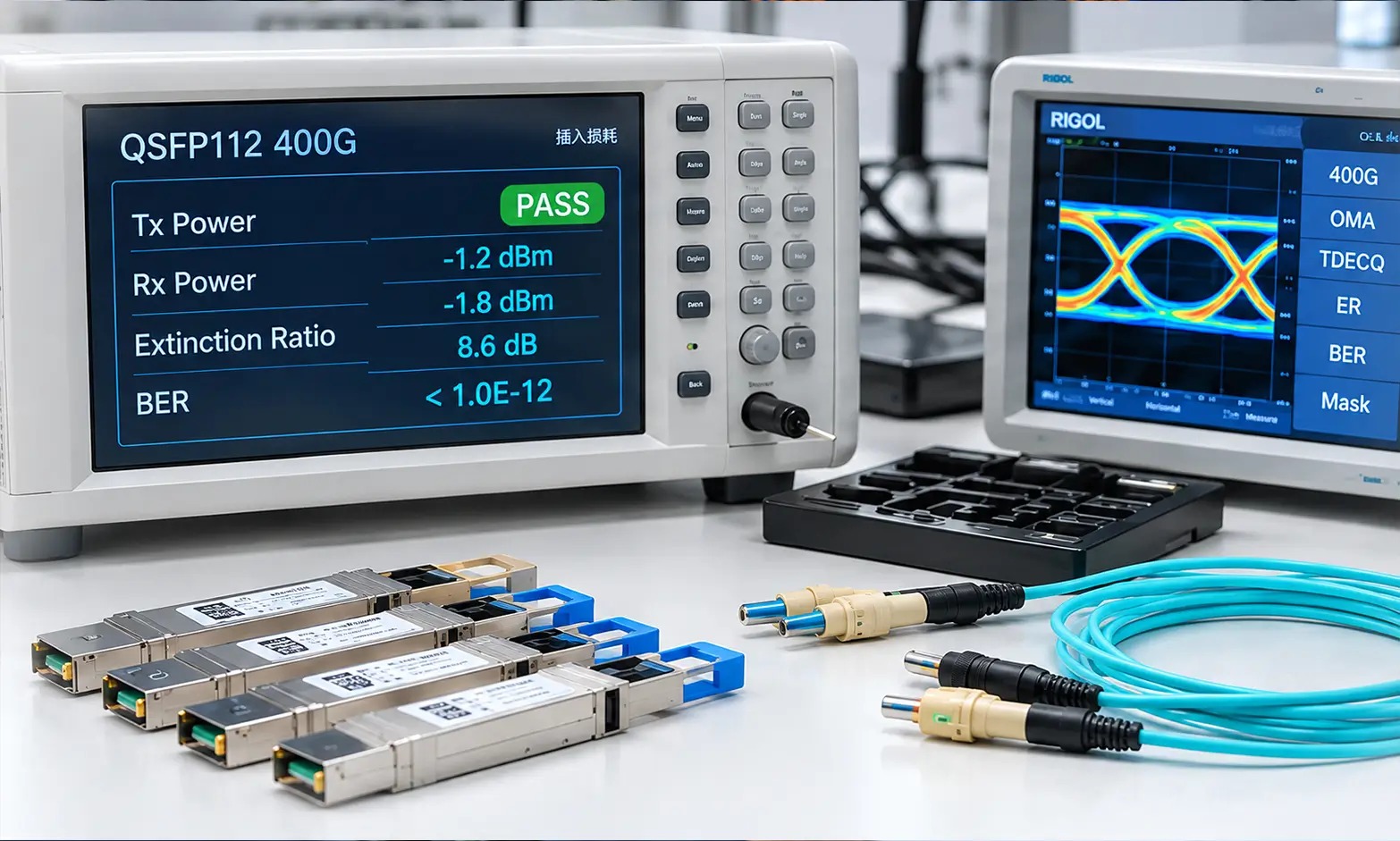
Products are validated through demo testing. Optical transceivers undergo 100% inspection before shipment.

A dedicated AICPLIGHT contact supports the project from requirement review through delivery and ongoing maintenance.
RoCEv2 enables RDMA over Ethernet, reducing CPU and kernel involvement in data transfers. For B200 AI training and inference clusters with substantial east-west GPU traffic, it delivers high-bandwidth, low-latency RDMA communication across a 400GbE Ethernet fabric.
DGX B200 systems continuously exchange GPU data across eight 400GbE links during distributed training and all-reduce operations. Each leaf switch uses 32 ports for server connections and 32 ports for spine uplinks, maintaining a 1:1 bandwidth ratio to prevent uplink oversubscription, congestion, and GPU wait time.
Lossless RoCE is enabled through PFC, ECN, and QoS configuration, while the 1:1 Fat-Tree ensures that fabric bandwidth is not oversubscribed.
At full theoretical scale, the fabric can support up to 256 DGX B200 systems and 2,048 400GbE RoCE host links.
One server is reserved for management in this deployment, leaving 255 DGX B200 compute systems and 2,040 active 400GbE RoCE links. The final SU contains 31 compute systems.
ConnectX-7 adapters must operate in Ethernet mode, and all adapters and switches must use consistent RoCE traffic priority, MTU, and QoS mappings. Enable PFC only for the RoCE priority, together with ECN marking and NIC congestion-control settings.
Before delivery, the topology, BOM, and cabling plan can be confirmed for the project, and selected optical transceivers can undergo optical performance testing. Link validation typically covers switch-to-NIC interoperability, 400GbE link establishment, RoCE traffic, stress testing, and link-stability verification.
CUSTOMER SUCCESS
RELATED AI FABRIC CASE STUDY
AICPLIGHT designed and delivered a 128-GPU NVIDIA B200 platform for a global financial services leader, including a Quantum-2 InfiniBand NDR computing fabric, optimized storage network, UFM management, and validated 800G/400G optical interconnects.
START YOUR PROJECT
Share your application, existing environment, and deployment requirements. AICPLIGHT will help assess the architecture and recommend suitable products.
We typically respond within 4 business hours.

