


Clinical Service Continuity
Redundant cores, resilient links, and protected network edges help maintain reliable access to HIS, LIS, PACS, EMR, medical imaging, and monitoring services.

SMART HEALTHCARE NETWORK SOLUTION
Connect clinical systems, medical devices, and hospital data centers through a secure, resilient campus network.
Plan Your Smart Hospital NetworkSMART HOSPITAL CAMPUS NETWORK OVERVIEW
A resilient campus network connects clinical applications, hospital data centers, mobile care, and Internet of Medical Things (IoMT) devices across secure wired and wireless environments.
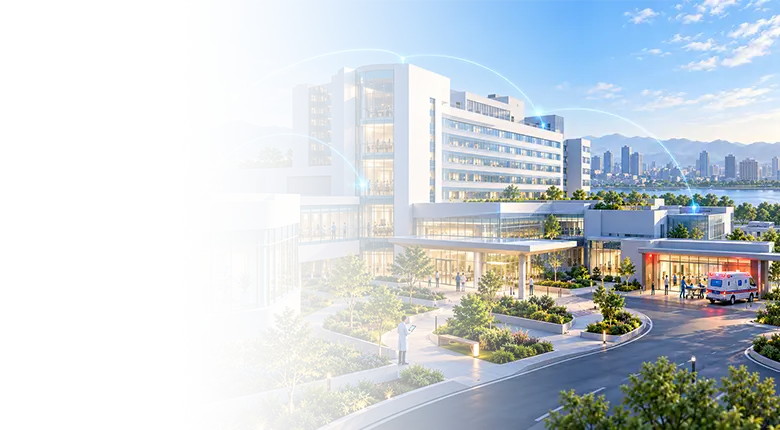
Redundant cores, resilient links, and protected network edges help maintain reliable access to HIS, LIS, PACS, EMR, medical imaging, and monitoring services.
Integrated wired, wireless, and IoMT connectivity supports clinical workstations, medical PDAs, mobile carts, cameras, asset tracking, and other connected hospital devices.
Separate clinical and internet access networks, controlled interconnection, NAC, PAM, centralized monitoring, and logging improve security, visibility, and troubleshooting efficiency.
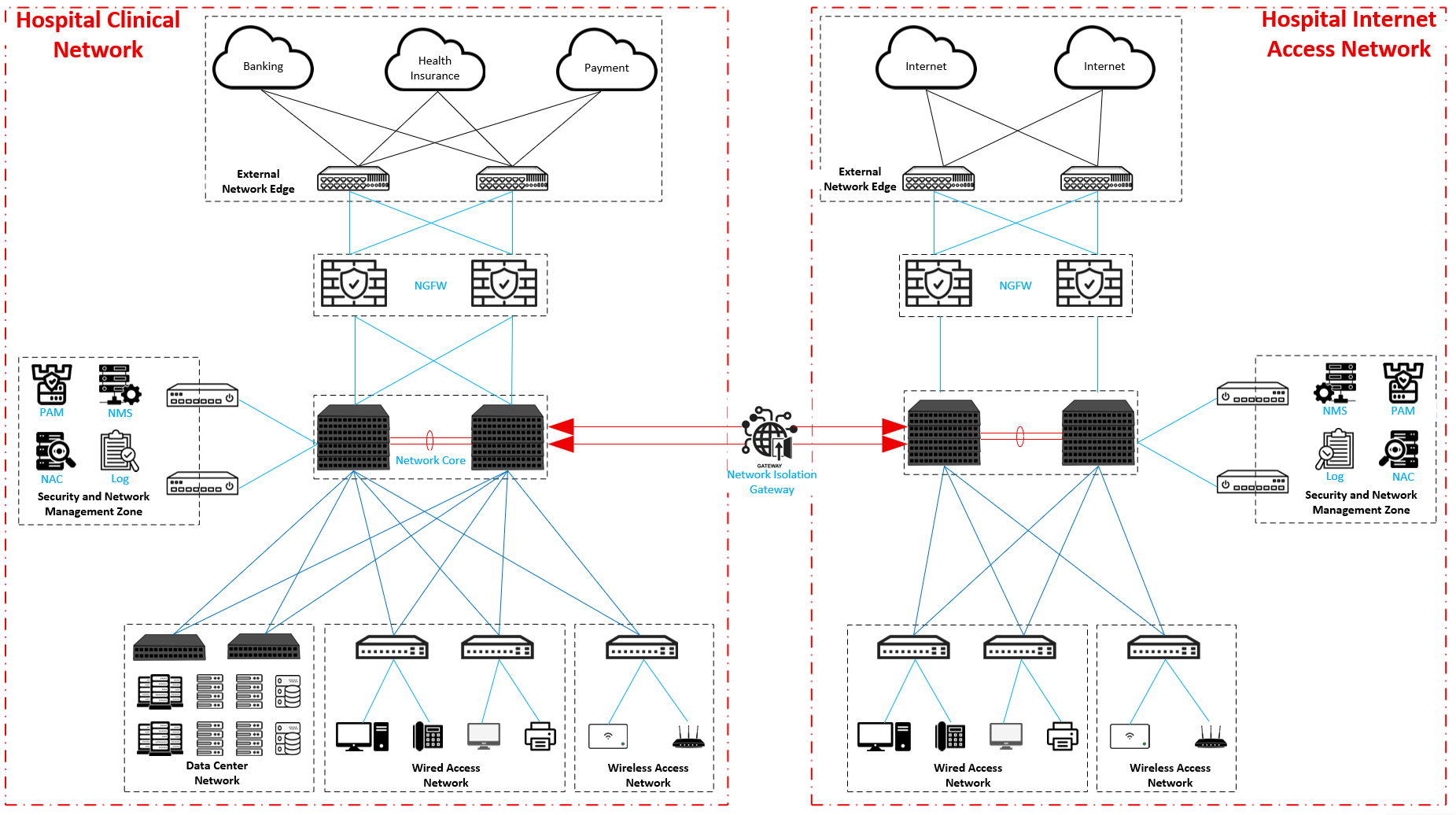
A dual-domain architecture separates the Hospital Clinical Network from the Hospital Internet Access Network, with controlled data exchange through a network isolation gateway. Redundant network edges, NGFW clusters, and dual core switches provide resilient connectivity across data center, wired, wireless, and external service environments.
The clinical and internet access networks operate as separate security domains. A network isolation gateway controls cross-domain data exchange, helping protect critical clinical systems while supporting authorized connectivity.
Each network domain uses redundant edge switches, NGFWs, and dual core switches. Cross-connected devices and links help maintain service availability if a network device or uplink fails.
The clinical network connects hospital data centers, wired endpoints, wireless devices, and external banking, health insurance, and payment services. The internet access network provides protected connectivity for internet-bound users and devices.
Dedicated management zones integrate PAM, NMS, NAC, and centralized logging. Hospital IT teams gain consistent access control, monitoring, auditing, and troubleshooting across both network domains.
Switching, optical, and cabling components for campus backbone, building access, and data center connectivity.


WHY AICPLIGHT
Solution design, validated products, and dedicated project support.
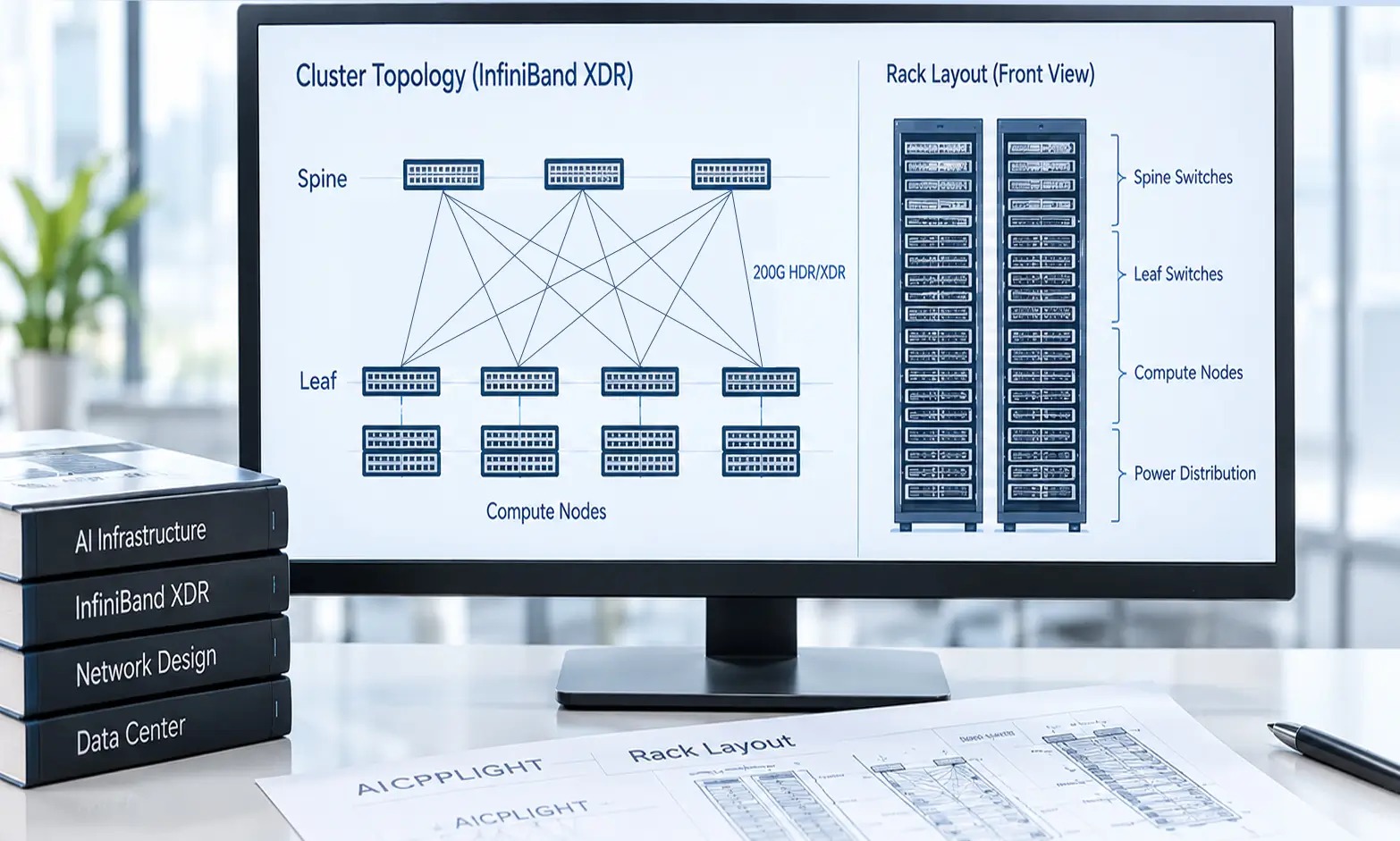
A tailored solution architecture and matched product plan based on your requirements, site conditions, and deployment goals.
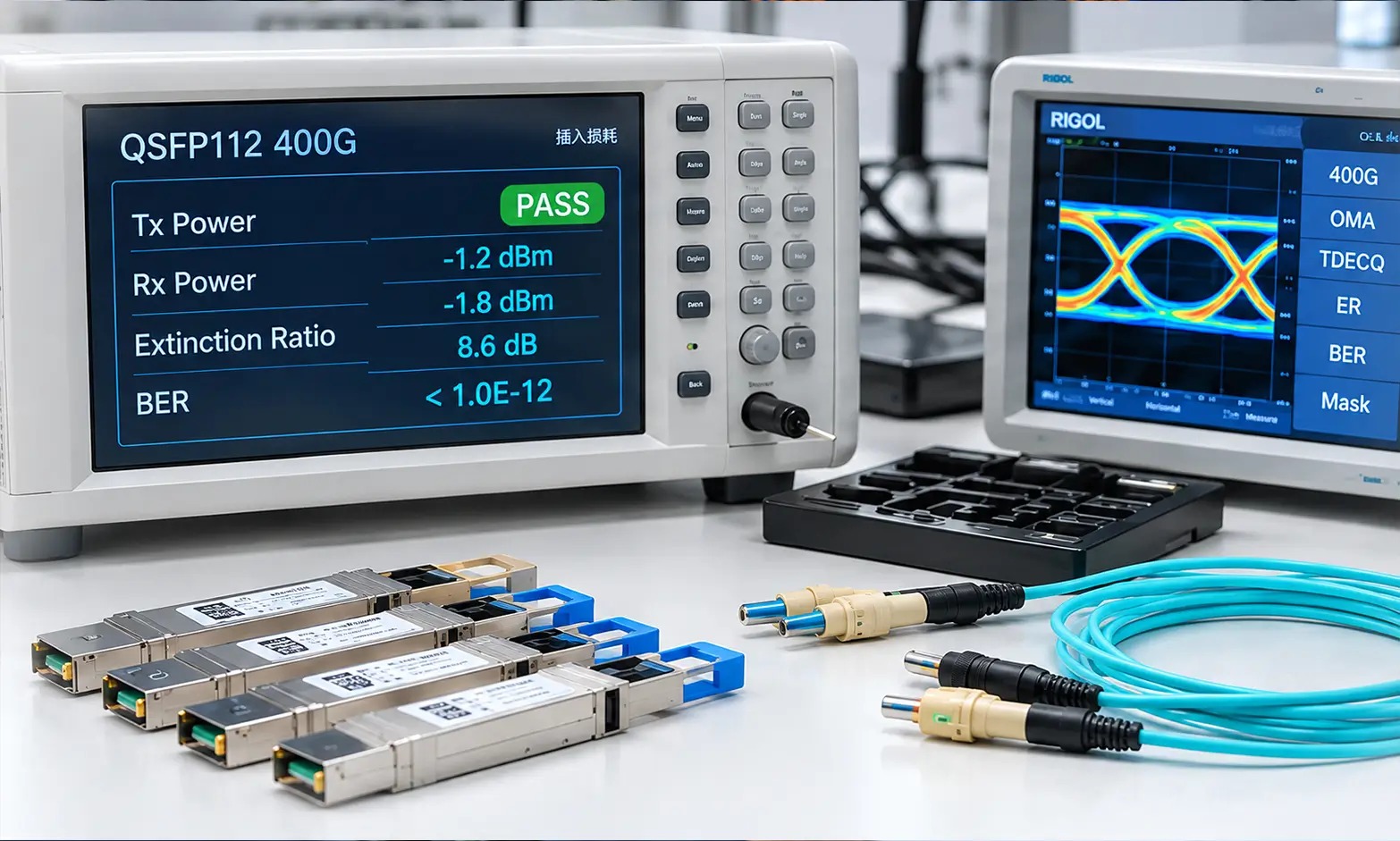
Products are validated through demo testing. Optical transceivers undergo 100% inspection before shipment.
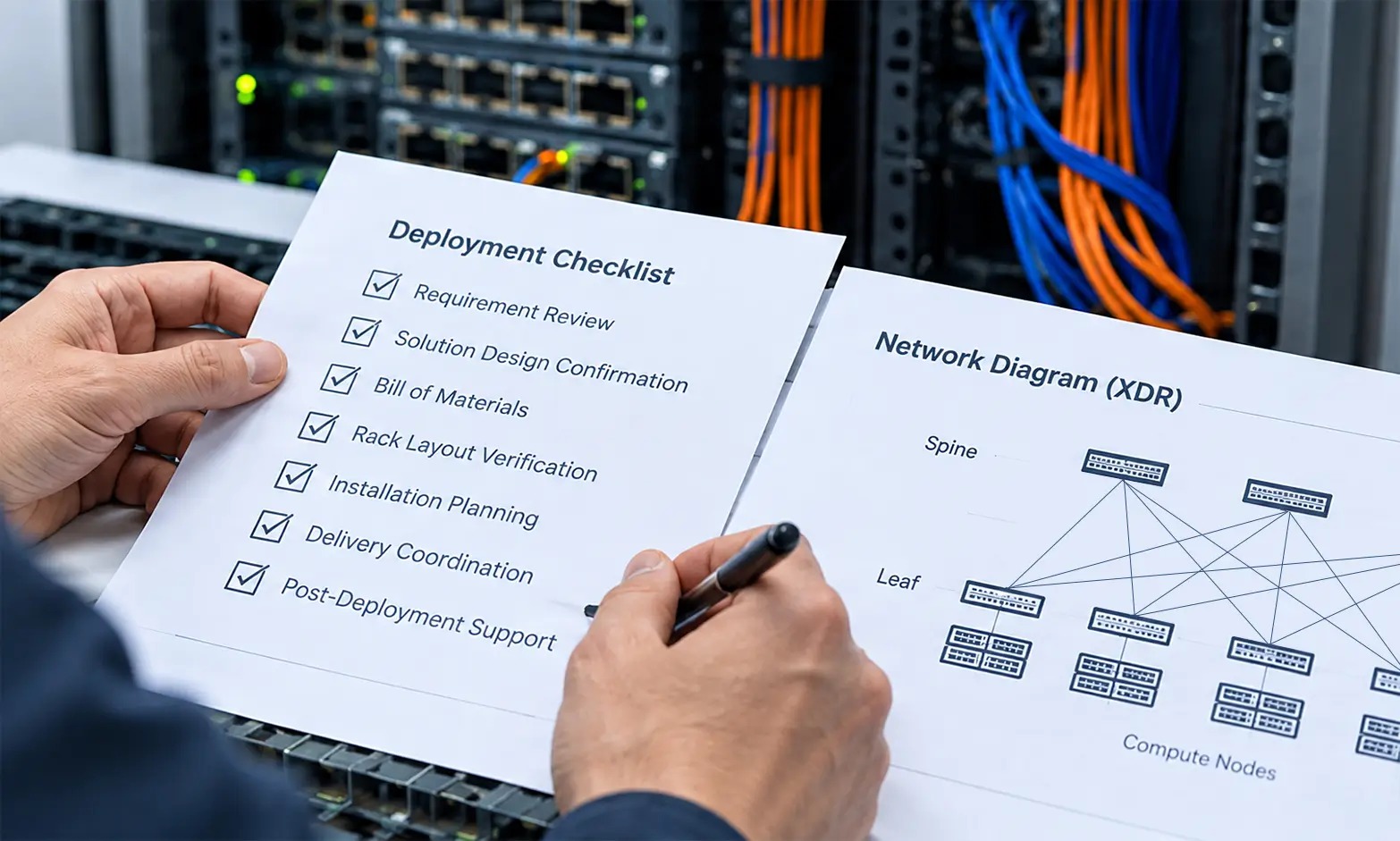
A dedicated AICPLIGHT contact supports the project from requirement review through delivery and ongoing maintenance.
No. The isolation gateway allows only approved data flows, while NGFWs and centralized logging monitor cross-domain traffic.
NAC identifies and segments each device. Firewall policies limit access to required systems such as PACS or EMR.
Yes, if the network lacks capacity planning and traffic control. QoS, traffic separation, and sufficient uplink bandwidth protect critical applications.
Yes, with compatible tags, a location platform, and calibrated wireless coverage. The network provides connectivity, while the application platform manages tracking and alerts.
Yes. The modular core, aggregation, and access design allows hospitals to add buildings, access switches, and wireless coverage without redesigning the entire network. Multi-campus or multi-data-center projects can add centralized policy management, data center interconnects, and technologies such as EVPN-VXLAN based on availability and scale requirements.
START YOUR PROJECT
Share your application, existing environment, and deployment requirements. AICPLIGHT will help assess the architecture and recommend suitable products.
We typically respond within 4 business hours.