As AI models scale toward exascale computing, data center networks are no longer just "data pipelines"—they have become the core infrastructure that determines GPU utilization, training efficiency, and overall ROI. In large-scale GPU clusters, inefficient networking leads to underutilized GPUs, increased latency and higher operational costs. This is why next-generation AI networking architectures are evolving rapidly—alongside emerging technologies such as Co-Packaged Optics (CPO).
Among the most discussed platforms today are Spectrum-X and Quantum-X, two flagship AI networking solutions from NVIDIA. But how do they differ—and which one should you choose?
What Is CPO and Why It Matters for AI Networking
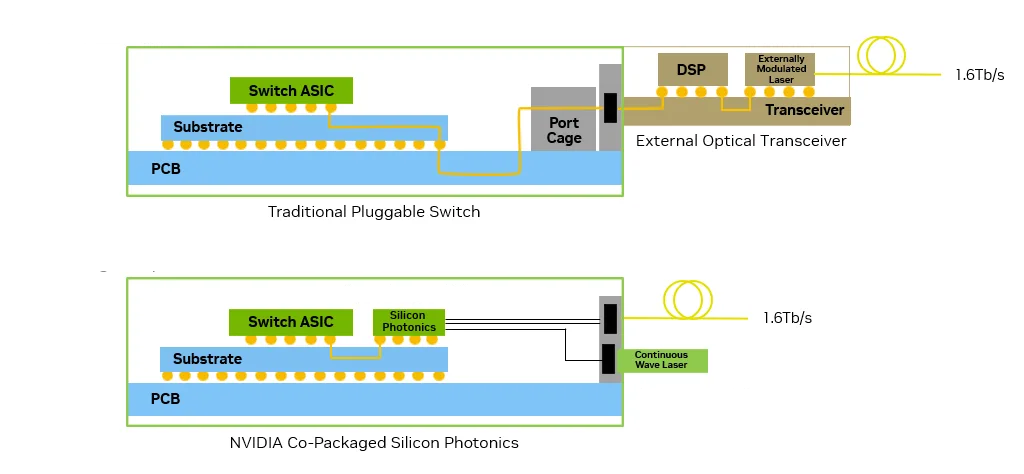
Co-Packaged Optics (CPO) integrates optical engines directly with the switch ASIC, reducing the need for long electrical traces found in traditional pluggable architectures.
While CPO is still an emerging technology and not yet widely deployed at scale, it is considered a promising direction for future 800G and 1.6T AI networks.
Figure 1: Traditional Pluggable Architecture vs CPO Architecture
The Key Potential Advantages of CPO include:
-
Lower power consumption: Delivers up to a 2–3× improvement in energy efficiency.
-
Reduced signal loss: Dramatically improves signal integrity bmaintaining stability in high-density AI clusters.y shortening the electrical path.
-
Higher bandwidth density: critical for 800G and 1.6T networks.
-
Improved thermal efficiency: Vital for maintaining stability in high-density AI clusters.
In practice, current AI networks still rely heavily on pluggable optics, with CPO expected to complement—not immediately replace—existing architectures.
Core Difference: Ethernet vs. InfiniBand Architecture
The most important distinction between Spectrum-X and Quantum-X lies in their protocol stack, which directly impacts scalability, latency, and deployment scenarios.
Spectrum-X: Ethernet-Based AI Factory Network
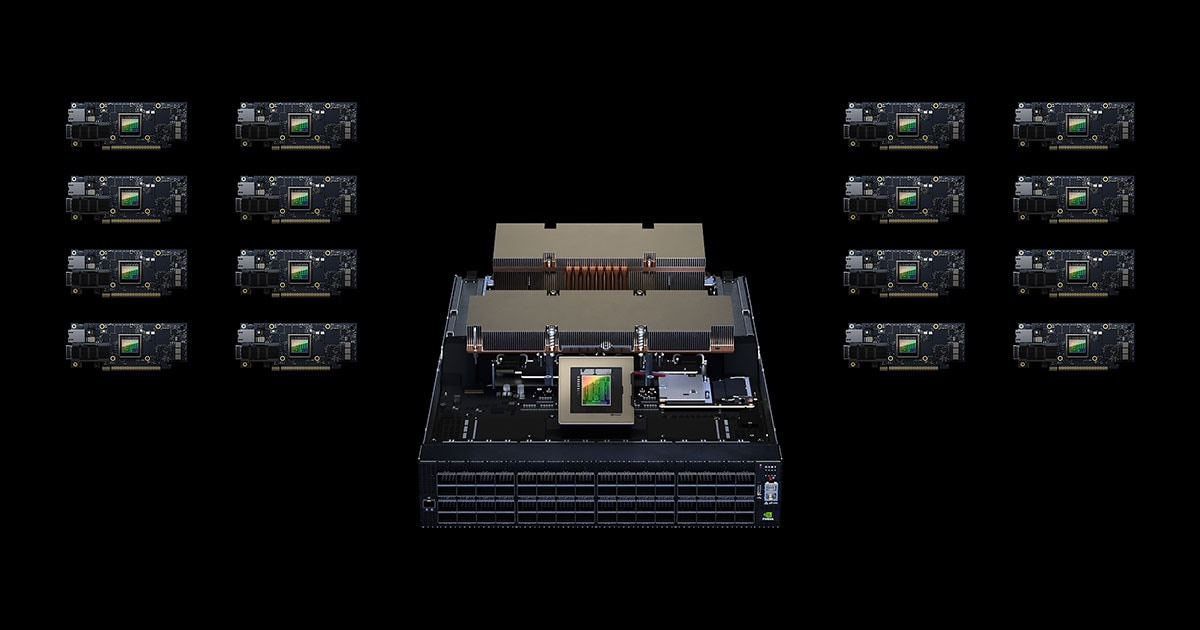
Spectrum-X is an Ethernet-based AI networking platform built on RoCE (RDMA over Converged Ethernet). It is designed for AI factories, cloud environments, and enterprise-scale deployments where flexibility and ecosystem compatibility are critical.
Figure 2: NVIDIA Spectrum-X Platform
Key Strengths of Spectrum-X:
-
Seamless Integration: Fits into existing Ethernet-based data center environments.
-
Multi-Tenancy: Built-in support for isolated, multi-tenant environments.
-
Workload Flexibility: Versatile enough to handle both AI training and inference (hybrid workloads).
-
Horizontal Scaling (Scale-Out): Designed for large-scale, distributed AI environments where clusters may span multiple regions.
Quantum-X: InfiniBand-Based AI Supercomputing Network
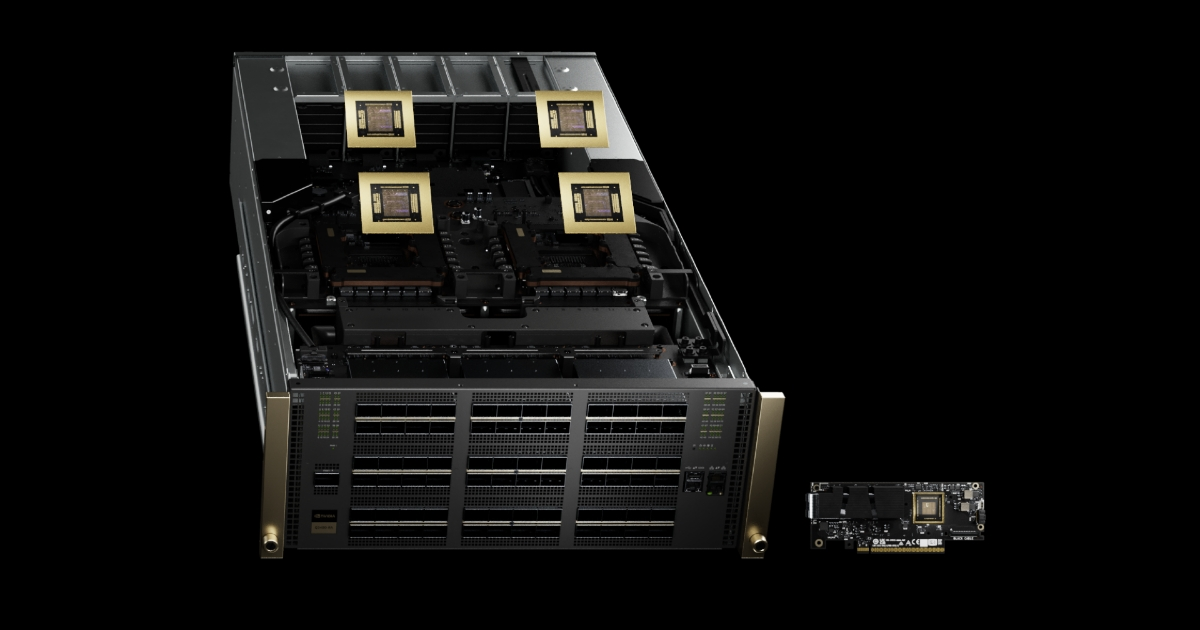
Quantum-X is purpose-built for ultra-high-performance AI supercomputing. Utilizing the InfiniBand (IB) protocol, it is optimized for tightly coupled GPU clusters where performance and extreme low latency are the only priorities. Quantum-X is the preferred choice for AI supercomputers and research clusters.
Figure 3: NVIDIA Quantum-X Platform
Key Strengths of Quantum-X:
-
Extreme Low Latency: Minimal communication delay across nodes.
-
In-Network Computing: Features SHARP v4 acceleration, which executes collective operations (like All-Reduce) directly inside the switch.
-
Maximum Efficiency: Delivers a 9× improvement in in-network computing performance compared to traditional methods.
-
Vertical Scaling (Scale-Up): Designed for single massive clusters, supporting 100K+ GPUs in a tightly coupled system.
Spectrum-X vs Quantum-X: Key Differences
| Feature |
NVIDIA Spectrum-X |
NVIDIA Quantum-X |
| Protocol |
Ethernet (RoCE) |
InfiniBand |
| Architecture |
Scale-out |
Scale-up |
| Latency |
Low |
Ultra-low |
| Ecosystem |
Open / standard |
Specialized |
| Use Case |
Cloud AI / Enterprise |
HPC / AI Supercomputing |
Hardware Evolution: From Pluggable Optics to CPO
Although CPO is gaining attention, it is important to clarify: Current Spectrum-X and Quantum-X deployments primarily rely on pluggable optical modules, such as 800G and evolving 1.6T optics.
Future platforms may integrate:
-
Silicon photonics
-
224G SerDes (for 1.6T)
-
CPO-based architectures
But today's deployments are still largely based on:
-
OSFP / QSFP-DD optics
-
112G PAM4 SerDes
Where Optical Modules Still Matter in a CPO Era
While Co-Packaged Optics (CPO) revolutionizes the switch interior, the modern AI data center relies on a Hybrid Architecture to balance performance, distance, and serviceability. In a standard Leaf-Spine topology, the deployment of optical solutions is strategically split:
Intra-Rack & Short-Reach (DR8): DR8 transceivers (short-reach, high-density) are utilized for high-speed connections within the rack or to adjacent rows, ensuring easy maintenance and replacement at the edge.
Long-Reach & Inter-Spine (FR8): For Data Center Interconnect (DCI) and long-distance transmission between spine switches or across different regions,
FR8 modules (long-reach, fiber-efficient) are the industry standard.
Why Pluggable Optics Remain Critical
-
Easier maintenance and replacement
-
Flexible "pay-as-you-grow" scaling
-
Essential for cross-rack and long-distance links
CPO may optimize switch internals, but pluggable optics remain indispensable in real-world deployments.
How to Choose: Spectrum-X vs Quantum-X
Choose Spectrum-X if:
-
You operate a hyperscale cloud or enterprise AI platform.
-
You need multi-tenant support and workload isolation.
-
Your infrastructure must span multiple regions or data centers.
-
You prioritize compatibility, flexibility, and easier deployment.
Choose Quantum-X if:
-
You are building an AI supercomputer or large training cluster.
-
You require the absolute lowest latency for synchronous GPU workloads.
-
Your environment involves HPC-AI hybrid workloads, such as scientific computing.
-
You have the infrastructure to support high-density liquid cooling.
Conclusion
Spectrum-X and Quantum-X are not direct competitors—they are complementary solutions designed for different AI networking paradigms.
-
Spectrum-X enables scalable, standardized AI factories built on Ethernet
-
Quantum-X delivers maximum performance for tightly coupled AI supercomputers
The future of AI networking is not about choosing a single technology—but combining multiple approaches:
For data center architects, the key is not choosing the "better" technology—but selecting the right architecture aligned with workload, scale, and long-term infrastructure strategy.

 English