
 English
As AI computing, hyperscale workloads, and high-performance networking accelerate, 800G optical modules have become essential building blocks for next-generation GPU clusters, hyperscale data centers, and low-latency backbone networks. With capital expenditure rising sharply and network upgrade cycles compressing, organizations face a critical decision:
Should you choose OEM-branded 800G optical transceivers, or qualified third-party compatible modules?
In environments where link sensitivity, thermal management, and protocol compliance are critical, such as AI training clusters and large-scale distributed compute fabrics, this choice requires rigorous technical and commercial evaluation. This article conducts a comprehensive comparison between original (OEM) and compatible transceiver modules to help enterprises make more suitable procurement decisions.

1.Architectural Characteristics of OEM and Compatible 800G Modules
OEM (Original Equipment Manufacturer) Optical Modules
OEM transceivers are officially released or certified by switch or server vendors such as NVIDIA, Cisco, Arista, and Juniper. They are characterized by:
- Vendor-specific firmware and EEPROM coding
- End-to-end qualification with the vendor's switch ASICs and system architecture
- Controlled supply chain and standardized lifecycle management
OEM optical modules are typically aligned with vendor-locked ecosystems and may incorporate proprietary features not explicitly exposed to third-party testing.
Compatible (Third-party) Optical Modules
High-quality third-party transceiver modules are engineered to achieve equivalence with OEM modules through:
- Replication of vendor coding schemes
- Precise DDM/DOM calibration
- Protocol and electrical parameter alignment
- Thermal and mechanical compliance with the OSFP and QSFP-DD800 standards
Notably, both OEM and compatible optical modules typically leverage the same upstream component ecosystem (e.g., DSPs from MaxLinear/Marvell, photonic ICs, EML/SiPh lasers), resulting in high architectural similarity at the device level.
2.Performance Evaluation
The operational integrity of 800G optical modules is governed by three primary determinants:
(1) Optoelectronic Integration
- Silicon Photonics (SiPh) or EML-based transmitters
- High-performance DSP from Marvell, Broadcom
- Advanced PAM4 modulation for 100G per-lane signaling
(2) Mechanical & Thermal Architecture
- OSFP/QSFP-DD800 thermal envelope design
- EMI control and signal integrity optimization
- Internal heatsink and airflow engineering
(3) Manufacturing & Validation Workflow
- Automated optical alignment
- Digital equalization calibration
- Functional burn-in and stress testing
When using identical DSP and optical chipsets, compatible modules achieve comparable performance metrics to OEM modules. Their power tolerance, insertion loss, FEC performance, and BER compliance are virtually indistinguishable from OEM modules under standardized conditions.
3.Compatibility and Interoperability
800G transceiver deployments introduce heightened interoperability demands, including:
- Vendor authentication handshakes
- EEPROM structure conformity
- EPC/DSP tuning for long-reach (LR) and short-reach (SR) variants
- Precise DDM data conformity
- Host-device thermal and signal feedback loops
Leading compatible module vendors implement brand-specific coding libraries and actively test against real equipment such as NVIDIA H100 / H200 SuperPOD nodes, Arista 7800/7500R series, Cisco 8000 series etc.
High-quality compatible 800G modules can achieve OEM-grade interoperability across major switching platforms, provided that the vendor maintains large-scale device testbeds and robust firmware adaptation capabilities.

AICPLIGHT 800G transceivers deliver exceptional compatibility and rock-solid stability
4.Reliability and Thermal Stability
800G transceivers operate within tighter thermal and signal windows than previous Ethernet generations. Reliability hinges on:
- 48–72 hour accelerated aging
- Thermal cycling across -5°C to 70°C
- TDECQ margin stability
- BER < 1×10⁻¹² under full load
- OSFP thermal envelope compliance
Industry-leading third-party vendors apply OEM-equivalent environmental validation protocols, ensuring operational continuity in high-density AI data center deployments.
Technical Insight: For 800G transceiver optics, thermal engineering and host-module airflow design are more consequential than branding. A specific point of emphasis is thermal compliance for 800G OSFP form factors, where module-level heatsink architecture and host airflow design become dominant reliability determinants.
5.Economic Considerations
The cost differential between OEM and compatible modules remains substantial, with compatible modules offering 50–80% CAPEX reduction. For large-scale AI clusters requiring thousands of optical links, this differential significantly impacts total cost of ownership. For example, a 1024-GPU H100/H200 training fabric requires ~2,000 modules, this translates into: Millions to tens of millions in strategic CAPEX savings—without sacrificing performance.
AICPLIGHT offers 800G compatible OSFP modules (including DR8, SR8, 2×FR4) at:
- 40–70% lower price than OEM modules, depending on the model
- Stable supply and large stock availability
- Enterprise-grade reliability tests aligned with international standard
This provides customers with significantly reduced CAPEX while maintaining OEM-level quality, making AICPLIGHT an ideal choice for AI clusters and hyperscale data centers.
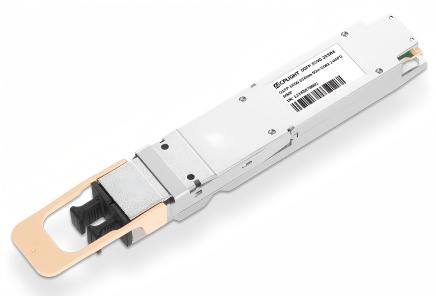
AICPLIGHT 800GBASE 2xSR4/SR8 OSFP Optical Transceiver Module ($459)
6.Delivery Efficiency
OEM supply chains often experience:
- Long lead times
- Back-order constraints
- Allocation priority for select customers
In contrast, compatible optical module providers typically offer:
- Rapid fulfillment from maintained inventory
- Flexible production scaling
- Custom stocking programs for hyperscale deployments
This responsiveness is critical for AI infrastructure with compressed deployment cycles.
7.Support and Maintainability
OEM Advantages
- Unified vendor governance
- Structured firmware ecosystem
- Long-term product lifecycle assurance
Compatible Vendor Advantages
- Faster RMA turnaround
- Extended warranty options
- Custom feature tuning unavailable from OEMs: Power level optimization; Custom coding for multi-vendor networks; Tailored DDM thresholds; Special AOC/DAC configurations
This flexibility enhances maintainability in heterogeneous network environments.
8.Recommendations by Application Scenario
- AI / GPU Supercomputing Clusters (NDR/NDR+ Environments)
Compatible 800G OSFP DR8/DR8+ modules are generally suitable, given validated interoperability and the need for large-scale cost optimization.
- Hyperscale Cloud Data Centers
Compatible transceiver modules may serve as primary optical interconnects, supplemented with limited OEM modules for cross-validation within multi-vendor deployments.
- Telecom Backbone / Financial Trading Networks
OEM optical modules may be preferred where regulatory compliance and vendor-controlled lifecycle governance are essential.
- Enterprise Data Centers / Private Cloud
Compatible optical modules are typically sufficient, offering high performance with substantial cost benefits.
Conclusion
From the above analysis, it indicates that compatible 800G optical transceivers demonstrate performance, interoperability, and reliability metrics comparable to OEM modules, owing to shared component ecosystems and sophisticated calibration methodologies.
From a technical, financial, and operational perspective:
✔ If your priority is absolute vendor consistency → OEM Modules
✔ If your priority is performance parity + large-scale cost optimization → Compatible Modules
For AI data centers, GPU clusters, and hyperscale cloud providers, compatible 800G optical modules have become the dominant choice, driven by:
- Equivalent performance
- Significant CAPEX reduction
- Faster deployment
- Superior customization flexibility
As the industry transitions toward 800G and beyond, the role of high-quality third-party optical modules will continue to expand, driven by technological maturity, supply chain flexibility, and the evolving demands of AI-centric computing.


